Cheyenne leaders split on how to handle a potential AI data center crash
Local officials disagree on whether the city has a strategy for the thousands of acres of new tech infrastructure currently being built in Laramie County.
By Allison Rojas ·
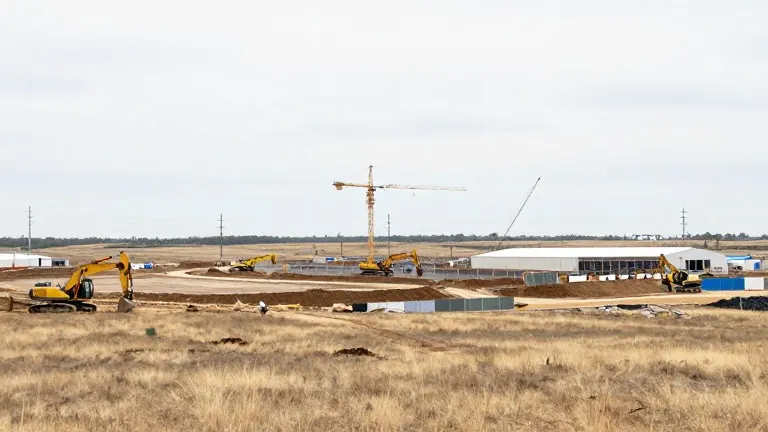
Residents of Cheyenne are facing a rapid expansion of industrial infrastructure, with data centers rising across the region. The city has annexed thousands of acres to accommodate these projects, including a 3,500-acre site south of town designated for a long-term Microsoft buildout. A 2.7-gigawatt Google data center campus is also planned in the area. Meta is constructing a campus that cost more than $800 million, a project that has been underway since 2024.
The surge in construction has raised questions about what will happen if the national investment in artificial intelligence slows down. Wall Street money managers are divided on whether the current spending pace is sustainable. If investors lose confidence in AI returns, funding for new construction could dry up. This would leave communities with stalled projects, half-finished buildings, and power grids built for demand that may never materialize.
Cheyenne City Council member Larry Wolfe has seen a similar cycle before. In the late 1990s, companies laid massive amounts of fiber-optic cable across Wyoming. When the dot-com bubble burst in the early 2000s, demand for that infrastructure collapsed. Wolfe’s firm represented several companies involved in laying those lines. He recalled that crews tore up the same roads repeatedly to install parallel cables. The projects were finished but then sat dormant for years because the capital markets pulled back.
Wolfe believes the current data center boom is larger than the telecom rush of the 1990s. He notes that today’s projects involve billions of dollars in borrowed money and major power grid overhauls. He says the city currently lacks a strategy for a market downturn. "There's no plan in place," Wolfe said. He has called for decommissioning rules to determine what happens if companies abandon facilities or remove servers when the technology becomes obsolete.
Betsey Hale, CEO of Cheyenne LEADS, disagrees with the urgency of the concern. She serves as the economic development group for Cheyenne and Laramie County. Hale argues that most of the data centers in the area are for cloud computing rather than specific AI workloads. Cloud computing supports everyday services like online banking and streaming. She believes this demand is stable and will continue to grow regardless of AI market fluctuations.
"I don't think we're going to see a bust," Hale said. She expressed confidence in the local economy's resilience due to the diversity and strength of the companies moving into the area. Hale noted that many of the data centers are not purely for artificial intelligence. She pointed out that companies like Google and Meta are building facilities that support social media and search engines, which remain essential to consumers and businesses.
Hale attributed some of the current anxiety about an AI bubble to the political climate. She said there are 40 key elections this year where data centers are a major issue. "I think this stuff that's being perpetuated right now is strictly driven by the election," Hale said. She acknowledged that economic downturns are normal but did not rule out the possibility of a correction in the AI sector.
Council member Pete Laybourn shares Wolfe's caution. Laybourn said the city’s leadership is focused on managing the current wave of development. "My gut feeling is that every boom has a bust," Laybourn said. He believes the city will have to manage a potential crash just as it is managing the current growth.
David Bullard, a senior economist with the Wyoming Department of Workforce Services, noted that the local labor impact of a potential bust might be limited. Most of the labor currently tied to data centers is in early-stage construction. Much of this workforce travels into Wyoming from other states to fill short-term gaps. Bullard said this is consistent with the state's history of relying on outside labor for energy and industrial booms.
"We're just a very small state with a small labor supply," Bullard said. He added that the labor supply tends to come and go. The city continues to approve new industrial expansions while debating how to handle the structural leftovers if the market turns.
More Business · Consumer Watch · Report a business · Got a Story?