China’s tech selloff: $2.4 trillion in market value vanishes
Beijing’s new 60bn yuan AI fund and a planned stimulus remain stalled as consumer spending fails to keep pace with state investment.
By Amelia Gupta ·
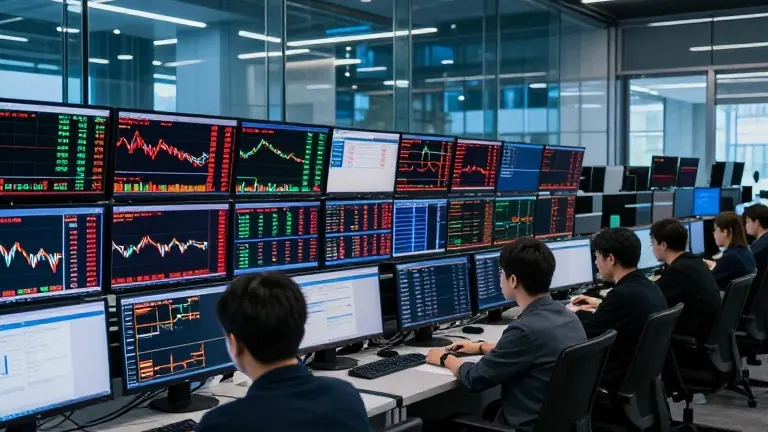
Chinese stock markets have lost $2.4 trillion in value since May, a decline driven by a sharp correction in artificial intelligence stocks. The STAR 50 Index, which tracks technology firms on the Shanghai exchange, has dropped 40% from its June levels. Broader indexes of major companies fell by approximately 20% over the same period.
According to Goldman Sachs, AI stocks represent more than 40% of the total market value in China and Hong Kong. This concentration means that volatility in the tech sector affects the entire domestic market. The current selloff indicates that the domestic economy is struggling to support the valuation of a booming AI sector, despite government efforts.
Beijing has invested heavily in the sector, including a 60 billion yuan state-backed AI fund that began injecting capital into domestic developers this month. However, Chinese consumers have remained hesitant to spend on technology, making it difficult for companies to generate consistent profits. Dan Wang, the China director for the Eurasia Group, noted that profit margins are lower than expected and domestic demand is weak.
Wang described a "general anxiety" among tech companies regarding the viability of state-backed models when consumer spending is low. She added that rising US interest rates and thin profit margins are compounding the pressure on the sector. The uncertainty is not limited to software; it extends to hardware and robotics, which Beijing views as the next frontier of AI.
The US has banned humanoid robots from China citing national security risks and is considering restrictions on Chinese components in data centers. These export controls hurt domestic companies that rely on international sales to offset weak home demand. Shares in Unitree, China's leading robot maker, have halved since they began trading in August. Wang stated that embodied intelligence does not yet appear capable of generating mass market profits.
Beijing has tried to redirect investor money domestically by restricting overseas investment, with new regulations taking effect on December 1. These measures have not yet resulted in a sustained increase in domestic market investment. Policymakers face a timing constraint as the Chinese Communist Party gathers this week for its fifth plenum. The meeting will prepare for next year's 21st Party Congress, where Xi Jinping is expected to be anointed for a fourth term.
Analysts suggest there is little appetite for risky policy moves before the congress. Wang called any new stimulus measure "high risk," arguing that policymakers fear accountability if the measures fail to stimulate growth. No major stimulus is expected during this politically sensitive window, leaving the market to absorb the weight of the current correction without immediate government support.
The global AI boom is expected to continue for at least another year, offering some optimism for sectors like AI research and satellites. Satellite technology benefits from links to the military, ensuring long-term state support. In the US, Anthropic, the maker of the chatbot Claude, filed paperwork for an initial public offering that could raise up to $100 billion. China currently has no comparable blockbuster IPOs planned for the near term.
More Business · Consumer Watch · Report a business · Got a Story?