Film Production: Trinh T. Minh-ha Completes First U.S. Project
The filmmaker has finished editing 'The Undying Desert' and is already developing a sequel set in the Great Basin.
By Javier Sanders ·
Trinh T. Minh-ha, a Vietnamese-American filmmaker and theorist, confirmed she has finished editing her new feature 'The Undying Desert.' The project marks her first film set within the United States. She made the announcement at the Ji.hlava Documentary Film Festival in Czechia, where a retrospective of her previous work is currently screening.
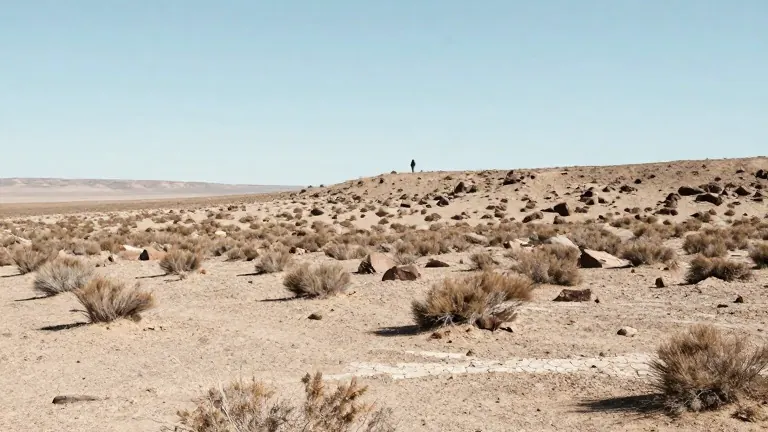
Minh-ha has spent nearly two decades filming in the Great Basin Desert. She noted that critics often questioned why she had not addressed American life, given her residence there. "I’ve made films in Africa, China, Vietnam and Japan, and people would ask: ‘When are you going to make a film about the U.S.?’ They were right, because I live there," she said.
The film explores the human connection to arid landscapes. Minh-ha described the desert as a space that strips away social performance. "It wipes away every notion that allows us to conform to certain ways of life. Suddenly, you don’t have to be polite or compete with others," she explained. She contrasted this with the perspective of Native Americans, who view the desert as a multi-layered environment where life and death remain intertwined.
Her approach rejects linear narrative structures. She cited works like 'Forgetting Vietnam' and 'Reassemblage' as examples of her collective style. "It’s like poetry, where the ‘I’ is collective. You’re inviting people to come in," she stated. She believes cinema should engage the entire body rather than just the eyes. "When I was first showing ‘Reassemblage,’ someone told me: ‘I’m hearing this film with my eyes and seeing it with my ears. I replied: ‘Perfect’," she recalled.
Minh-ha emphasized the political nature of her work without relying on traditional political themes. She noted that women are often attuned to everyday activities, which can become political when framed through a regressive lens. "When you turn the camera toward someone else, you also have to turn it toward yourself," she said. She advised emerging filmmakers to define their own rules rather than following oppressive regulations.
The filmmaker is already moving on to the next phase of her desert project. She co-directed a new film with Jean-Paul Bourdieu that will also take place in the Great Basin. This upcoming work focuses on groups that isolate themselves in the desert to simulate Martian conditions. "They plan to go there and colonize another planet," Minh-ha said.
She acknowledged that her work remains challenging for industry gatekeepers. "Even after so many years of making films, producers or programmers are not immediately interested in my work," she stated. However, she continues to build an audience by maintaining her specific artistic vision.
Minh-ha argued that documentary filmmakers today have more freedom but also greater responsibility. "On the contrary, you have to be much more responsible because you are the one setting the rules," she said. She encourages viewers to approach her films with an open mind rather than looking for a specific message or story structure.