Paid Instagram influencers push California voters on billionaire tax
Campaigns spending over $350 million are compensating everyday creators to sway opinions on Proposition 40 and competing measures ahead of the November vote.
By Amelia Gupta ·
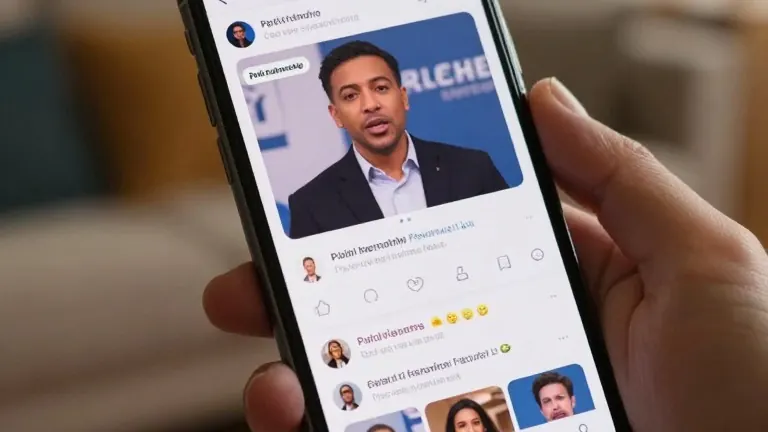
Voters in California face a complex web of paid social media posts as they prepare to decide on a one-time 5% tax on the assets of approximately 200 state billionaires. This week, campaigns on both sides of the Proposition 40 debate are compensating content creators, ranging from food bloggers to parents, to post their views directly into voters' feeds. These sponsored messages often appear alongside casual lifestyle content, blurring the line between personal belief and paid political advertising.
The financial stakes for this November election are among the highest in the state's history. More than $351 million in political donations has been raised for the contest. Opponents of the tax, including a coalition backed by Google co-founder Sergey Brin, have contributed over $350 million to fight Proposition 40 and support two other measures, Proposition 41 and 42, that could block the tax from taking effect. According to AdImpact, political advertising spending in California for the 2026 cycle is projected to approach $1 billion, with roughly $114 million directed to digital platforms such as Facebook, Google, Snapchat, and X.
Influencers are now a key channel for these funds. Bartley Chavez, a mother with over 47,500 Instagram followers, posted a video in October opposing the billionaire tax. In the clip, she argued that experimenting with state policy was risky for jobs and family finances. Her caption disclosed that the opposing campaign paid her for the post. Some followers reacted negatively, with one user calling her a sellout, while others supported her stance. Chavez did not respond to a request for comment regarding the backlash.
On the other side of the debate, Leigh McGowan, a political influencer with more than 3.5 million followers across platforms, received payment from the Proposition 40 campaign for some of her content. She argued in a sponsored video that the tax is not a punishment but a fair contribution to help the rest of the state. McGowan noted that many people distrust traditional media and prefer to hear from regular individuals who break down complex issues. She stated that people believe those who speak authentically about what they believe in.
A report from the Center for Democracy & Technology and the University of Pittsburgh Communication Technology Research Lab found that influencers receive between a few hundred dollars and $30,000 per post. The report noted that genuine belief in a political issue often coexists with financial compensation. The Speech Prof, a creator with more than 1.7 million combined followers on Instagram and TikTok, recently posted a video supporting the tax after rejecting a large offer from the opposition. He noted that the supporting campaign was a healthcare union rather than corporate oligarchs.
Some influencers are focusing on Proposition 42, a measure that prohibits new taxes on retirement holdings and personal savings. If voters approve both Proposition 40 and 42, the measure with the most yes votes generally becomes law. Karen Clay-Fenderson, a retired teacher and mother with over 120,000 Instagram followers, posted videos supporting Proposition 42. She disclosed that the campaign paid her for the content but said she did not explicitly tell followers how to vote, encouraging them to make their own choices.
State law requires influencers to disclose when they are paid for political posts. In September, Governor Gavin Newsom signed legislation allowing fines of up to $5,000 per post for creators who fail to make these disclosures. However, some creators say the rules are inconsistent. Clay-Fenderson noted that a campaign committee failed to notify her of her disclosure requirements, a requirement under California law. Evan Westrup, a spokesman for the coalition opposing Proposition 40, said any modern campaign needs to be active in the spaces where voters get information.
Suzanne Jimenez, chief of staff for the SEIU-UHW, said the Proposition 40 campaign is beating billionaires on social media impact despite being outspent. She cited influencers who support the tax because they want functioning hospitals and emergency rooms. Ramesh Srinivasan, a professor of information studies at UCLA, warned that the surge of personalized content could lead to confusion. He said that if people are seeing different realities through influencers and microtargeting, it becomes impossible to have a common basis for making decisions.