Spanish Rail Crash Leaves 69 Dead After Control Center Clears Train at 200 km/h
Audio recordings reveal that operators at Madrid’s Atocha station instructed a high-speed train to resume normal speed while another train remained stalled ahead on the same track.
By Allison Rojas ·
Rail passengers in Spain are facing a re-evaluation of safety protocols after audio records showed that control operators cleared a train for full speed while another train was still stationary on the track. The collision occurred in Toledo province and resulted in at least 69 deaths and dozens of injuries.
The incident took place on Wednesday morning, shortly after 9:00 a.m. local time. Two high-speed trains traveling from Madrid to Sevilla were involved. One was an AVE operated by state-owned Renfe, and the other was an Iryo service. A widespread computer failure disrupted normal rail operations in a zone approximately 140 kilometers south of Madrid.
The failure affected the LZB system, a continuous signaling and control network that monitors train speed and position in real time. This system can automatically brake a train if drivers exceed safety limits. When the system malfunctioned, both trains came to a halt. The Iryo train, designated as 6076, stopped about 30 kilometers ahead of the AVE, identified as train 2080.
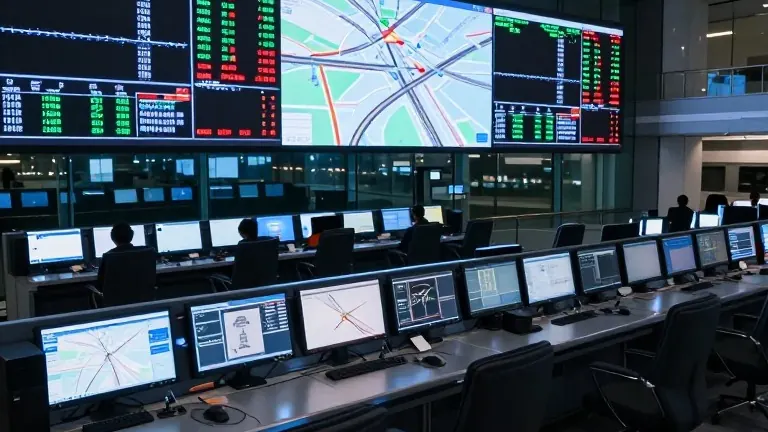
Recordings from the Atocha control center show operators discussing how to manage the situation near Urda, Toledo. At 8:41 a.m., an operator instructed the Iryo driver to disconnect and reconnect the LZB system and to resume travel under the BSL system with normal speed. The BSL system relies on physical signals along the track to manage safe separation between trains.
The Iryo driver confirmed the instruction, responding, 'Vale, perfecto, pues muchas gracias.' However, she later reported that she could not restart her movement due to a transmission fault. In a follow-up call, she advised that she had not been able to advance. The Atocha controller replied that she should move as soon as possible.
In parallel communications, the Atocha operator instructed the driver of AVE train 2080 to disconnect and reconnect the LZB system. The operator explicitly told the driver to resume travel with 'normal speed' under the BSL system. When the driver asked for confirmation, the operator replied, 'Sí.' The authorized speed for the AVE in that zone reached 200 km/h.
By 8:48 a.m., the distance between the two trains was roughly 30 kilometers. This gap is short if the rear train travels at its maximum authorized speed. Five minutes later, the AVE struck the Iryo from behind. The impact occurred because the AVE had been cleared to proceed at full speed while the Iryo remained stationary or moving slowly due to its unresolved transmission issues.
Spanish authorities expressed confusion over the decision to use standard speed protocols rather than safety speed protocols. Under standard procedure, when the LZB system fails, trains must operate at a maximum of 40 km/h. This lower speed allows drivers to visually identify obstacles and provides sufficient time to brake.
Transport Minister Óscar Puente stated that the decision to resume circulation without the safety system being fully restored was made by the control center. He described the circumstances as 'inexplicable.' Prime Minister Pedro Sánchez has ordered a comprehensive investigation. The inquiry has just begun and will determine the specific causes of the failure and the operational decisions made in the minutes before the crash.
More Business · Consumer Watch · Report a business · Got a Story?