Trump closes out final midterm rallies
The president held more than 25 events in October, blending nostalgia with appeals to pretend he is still a candidate.
By Allison Rojas ·

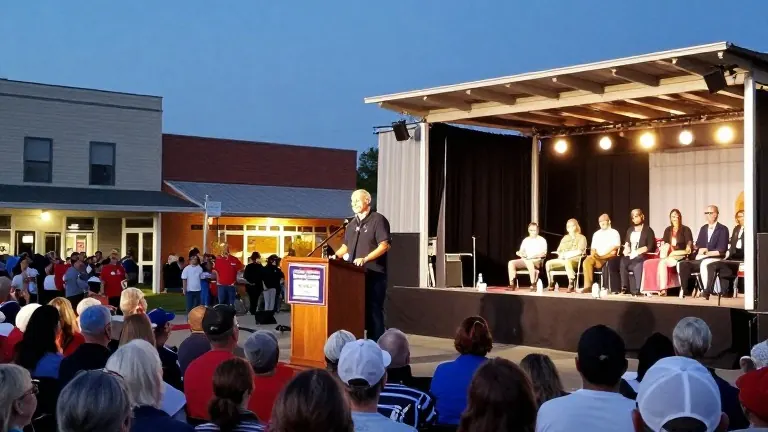
President Trump stood before crowds in South Carolina and North Carolina, thanking supporters for memories he believes will not be repeated. The events marked the final phase of a grueling campaign schedule that dominated the last month of the year.
The president held over 25 rallies in October, primarily in red states where Republicans face stiff competition. He used these appearances to support Senate candidates Darlene Graham in South Carolina and Michael Whatley in North Carolina. Both candidates were personally selected by Trump but have struggled to generate significant excitement among the base.
Trump frequently reminded attendees that he is not on the ballot in 2026. He asked voters to treat his preferred candidates as if he were running for office himself. At a rally in Greenville, North Carolina, he urged the crowd to support the tax cuts and border policies enacted during his first term. He argued that Democrats seek to dismantle these achievements.
The rallies featured familiar themes mixed with new material. Trump repeatedly cited tariffs, calling them his favorite word until he recently demoted the term to fifth place. He also introduced a recurring joke about Ohio Senator Jon Husted’s physique, claiming the comment helped the candidate gain 12 points in the polls. He tested the joke in Texas, where he compared Husted’s build to that of Senate candidate Ken Paxton.
A central promise of the campaign is a $5,000 dividend for American adults if Republicans win both chambers of Congress. Trump described this payment in casual terms, noting it might only cover a hamburger and a small dessert at Mar-a-Lago. He joked that his Florida resort is not an ideal venue for budget-conscious travelers.
Loyal supporters traveled extensively to attend these events. Blake Marnell, a San Diego resident known for wearing a suit designed to resemble a brick wall, spent the entire month of October attending rallies. He referred to himself as Mr. Wall, a nickname Trump has used on stage. Marnell said he treated the month as a vacation, preferring political rallies to cruises.
Other attendees expressed a sense of urgency to see the president in person before he potentially steps away from the center of politics. Cindy New of Emerald Isle, North Carolina, said she had voted for Trump three times but never seen him live. She attended the Greenville rally as a one-time event to witness the performance before he potentially retired from the political spotlight.
Scheduling adjustments occurred in the final days before the election. The Republican National Committee initially announced the cancellation of two weekend rallies in Iowa and Kansas. They proposed a series of tele-rallies instead. Within 24 hours, the plan changed, and in-person events were rescheduled for Sunday.
A source familiar with the decision stated that Trump would hold back-to-back rallies in Kansas and Iowa on Sunday. This change came alongside nearly 20 planned tele-rallies. The rapid reversal ensured that in-person appearances would continue through the final days of voting.
Trump acknowledged the physical toll of the campaign during a stop in Daytona Beach, Florida. He described the 28 consecutive days of rallies as exhausting and estimated his voice was operating at 49.2 percent capacity. He closed his remarks in Corpus Christi, Texas, by telling the crowd they had never done anything like this before and must win on November 3.