Wyoming Firefighters Cross Into Montana to Save Lives
Volunteers from the Tongue River district argue that quick response times justify the cost of serving residents on both sides of the state line.
By Amelia Gupta ·
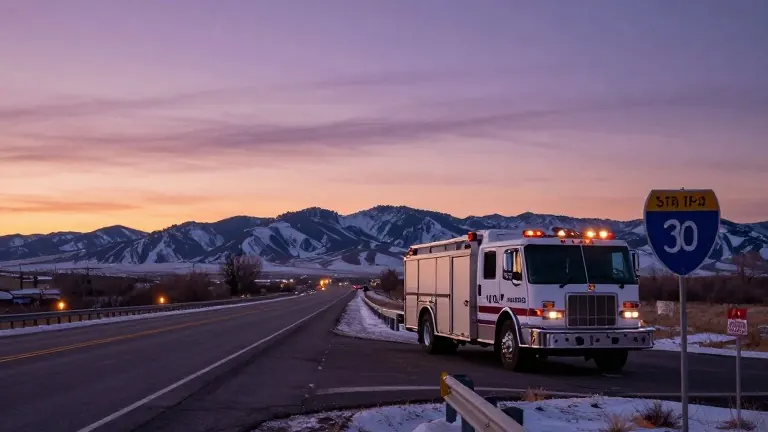
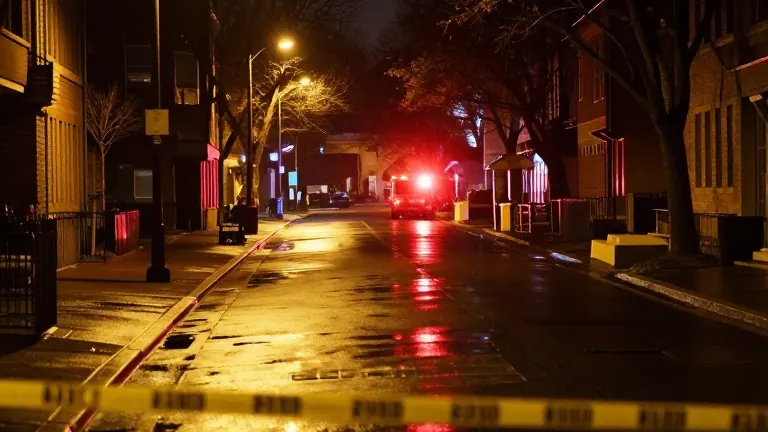
When a car rolls off Interstate 90 near the Montana border, the first help to arrive often comes from Wyoming. Fire Chief Jeff Barron of the Tongue River Fire Protection District says the district crosses into Montana five or six times a year, usually to assist with vehicle accidents in winter. He notes that the people trapped in those vehicles are frequently Wyoming residents.
"It's Sheridan folks who are traveling that road," Barron said. "It's our taxpayers."
The district’s proximity to the border allows its volunteers to reach emergencies much faster than the nearest Montana agency. Barron explained that an ambulance from Hardin, Montana, can take 45 minutes to an hour to reach certain accident scenes. His volunteers can cover the same distance in about 20 minutes. This difference matters most when injuries are severe and vehicle extrication equipment is needed.
Barron estimates that more than half of the accidents his district handles on that stretch of highway involve vehicles with Wyoming license plates. Others involve commercial trucks moving goods through the state. He argues that refusing to respond because an accident happens on the Montana side of the line makes little sense.
Critics have raised questions about whether Sheridan County taxpayers should pay for services in another state. They point to a lack of detailed public accounting for these cross-border expenses. Barron defends the practice, stating that the costs are modest. He estimates a typical trip across the border costs the district between $200 and $300 in fuel. Since the district is staffed by unpaid volunteers, he considers this expense well within budget.
The issue extends beyond traffic accidents. Wildfires can spread across state lines, threatening property and livestock. Barron said responding to a fire while it is still in Montana is often the most effective way to protect Wyoming. On Oct. 6, sparks from a BNSF Railway train ignited grassfires near Parkman. The incident required a combined response from Tongue River, Dayton, Goose Valley, Clearmont, and Sheridan fire agencies, along with state and federal partners.
Barron is currently working to recover the costs associated with that October fire. He also cited a February incident where his volunteers helped Bureau of Indian Affairs firefighters on the Crow Reservation in Montana. The BIA lacked specific equipment for structure protection, and the nearest Montana unit was 40 minutes away.
Cross-border cooperation is often guided by mutual-aid agreements. On Sept. 1, Sheridan County commissioners reapproved an agreement with Big Horn County, Montana. Under this deal, the responding agency does not charge for the first 12 hours of an incident. After that, the parties negotiate reimbursement. Barron noted that the Tongue River district operates independently of the county government and is not automatically covered by that agreement.
He is working on a separate agreement with Big Horn County that would mirror the county's terms. He is also seeking to establish a formal agreement with the Crow Tribe. Barron said that for short responses, the administrative cost of creating an invoice often outweighs the money recovered. He described the current arrangement as functional for brief deployments.
The Tongue River district funds itself through ad valorem taxes and general purpose excise tax revenue. Barron said the recent 25% property tax reduction cost the district about $8,000 in revenue. He estimates a further 50% reduction could cost another $9,000. The district also provides fire protection to the town of Ranchester. The town provides a building rent-free and pays utilities, which Barron said is critical because leasing comparable commercial space would consume the entire district budget.
The district's work has improved Ranchester's fire protection insurance classification from a 6 to a 5, a change that can lower rates for property owners. The town has also approved a $5,000 request for equipment. Barron said his volunteers leave their families and jobs when the call comes. They do not ask whether the person in the vehicle pays taxes in Wyoming or Montana. They ask where the emergency is and how quickly they can get there.