Co-pilot identified in Florida Learjet crash that killed 9
Nathalia G. Filgueiras, 20, was flying from Austin to the Bahamas when the jet broke apart and struck a neighborhood near West Palm Beach.
By Allison Rojas ·
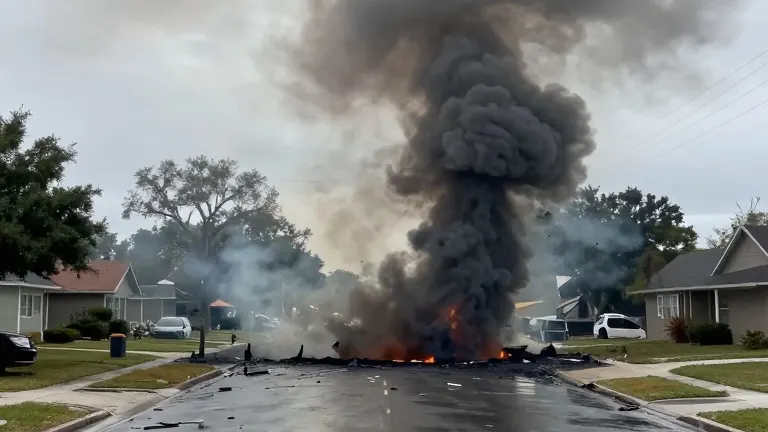
All nine people aboard a private Learjet died when the aircraft crashed and exploded in Greenacres, Florida, on Sunday. The co-pilot, Nathalia G. Filgueiras, 20, was identified by her family on Monday.
Her father, Allan Filgueiras, confirmed to NBC Miami that she was flying the jet from Austin, Texas, to the Bahamas. Her sister, Giulia, said the family is from Brazil and that Nathalia learned to fly from her father, who is also a pilot. Giulia described flying as her sister's greatest passion.
Filgueiras earned her pilot's license in 2023 while a 17-year-old senior at West Boca Raton Community High School. The license allowed her to fly the jet but did not rate her to be in command of the flight.
Air traffic control recordings show the pilot reported problems while the plane was heading east at 35,000 feet. The pilot stated that light, clear ice was accumulating and that moderate turbulence was jolting the aircraft by as much as 700 feet. Rain was falling on the region at the time.
The pilot requested permission to climb 2,000 feet before declaring an emergency. The jet lost altitude rapidly. The pilot radioed that the plane was descending 8,000 feet per minute, then 10,000 feet per minute, and finally 20,000 feet per minute in an overspeed condition. Moments before impact, the pilot stated, "We're going to crash into the ground."
Video from passersby captured the jet banking sharply right before striking near the roadway. Anthony Blackmon, a resident near the site, said debris hit his house and that the road was on fire. "I've always seen it on the news, never thought it would happen so close to somebody like how it happened today," Blackmon told NBC Miami.
National Transportation Safety Board member Tom Chapman said evidence indicates the aircraft was breaking up before impact. "We do have some indication that the aircraft was breaking up before impact," Chapman said. "We may find parts of the aircraft some distance away from the actual impact site."