Cyclone Arnab Strikes Andhra Pradesh, Evacuating 180,000 People
The storm brought winds of 135kph and a 1.5m surge, disrupting travel across India and affecting trekking in Nepal.
By Javier Sanders ·
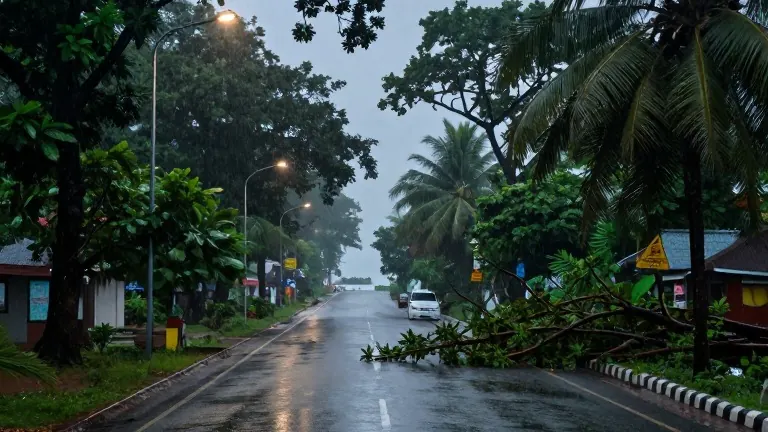
Cyclone Arnab hit the coast of Andhra Pradesh early Wednesday, bringing sustained winds of 135kph and heavy rain. The storm dropped trees onto highways and cut power to parts of the state. No deaths have been reported as of the morning update.
Local authorities moved 180,000 residents to safety in Andhra Pradesh and Odisha before the landfall. More than 12 million people lived in the projected path of the storm. India’s Meteorological Department warned that a storm surge of up to 1.5 meters above tide level would submerge low-lying areas in the state.
Daily life in the region came to a halt. Airlines and railway operators canceled flights and train services. Several schools closed their doors. In Kakinada district, one resident described the uncertainty of the flooding, saying, “No one knew whose house the water would rush into next or whose home would be submerged.”
The storm system weakened after moving inland. It was classified as a very severe cyclonic storm at landfall, the third-highest category on the national scale, before dropping to severe status. In neighboring Nepal, officials paused the issuance of trekking permits for three days starting Thursday.
This suspension affects the peak hiking season, when roughly 750 hikers usually receive permits each day. Authorities in Nepal cited fears that the storm could trigger avalanches and heavy snowfall in high-altitude zones through Saturday. The country is still dealing with the aftermath of a glacial collapse in August that killed more than 1,400 people.
Sri Lanka also reacted to the weather system. The Department of Meteorology warned of flash floods and landslides. Schools across the island nation closed to keep students safe from the potential hazards.