El-Sayed wins Michigan Senate race despite deep community division
Exit polls show a majority of Jewish voters backed the Democrat, but the candidate's comments on a synagogue attack and Israel policy left the community fractured.
By Allison Rojas ·
Abdul El-Sayed secured the Michigan Senate seat in Tuesday's election, winning over Republican challenger Mike Rogers. While the Democrat captured a small majority of Jewish voters in the state, the result left the local community divided on Wednesday morning. According to an exit poll of early voters, 57% of Michigan Jews supported El-Sayed. This figure stood in contrast to the 78% support his gubernatorial opponent, Jocelyn Benson, received from the same demographic.
Jordan Acker, a Democratic elected official and member of the University of Michigan Board of Regents, noted that less affiliated Jewish voters likely propelled El-Sayed's numbers. Roughly half of the state's 110,000 Jewish residents identify as unaffiliated. Acker speculated that more divided, affiliated community members may have leaned toward Rogers or split their votes. He predicted that Huntington Woods, a majority-Jewish suburb near his law office, would see an even split between the two candidates. This outcome would mark a sharp shift from the presidential race two years prior, where Kamala Harris defeated Donald Trump in the area by a nine-to-one margin.
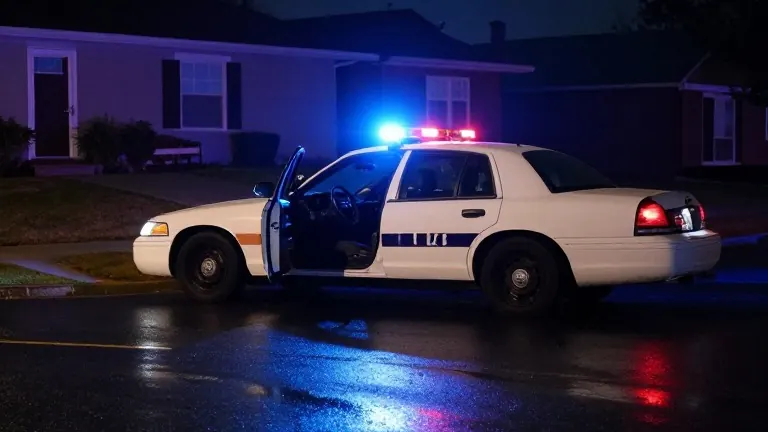
The friction within the community centered on El-Sayed's response to a March terror attack. Ayman Ghazali, a Hezbollah-inspired extremist, rammed a truck laden with explosives into the Temple Israel synagogue outside Detroit while preschool classes were in session. Ghazali exchanged gunfire with security guards before killing himself. The day after the attack, El-Sayed stated there was no justification for the violence but highlighted the assailant's grief over family members killed in an Israeli airstrike in Lebanon. He described the motive by saying, "Hurt people hurt people."
Acker called that phrasing an unforgivable way to describe the community. He noted that Acker remained undecided on the Senate race until less than a week before the vote. Acker refused to disclose his choice on election day to avoid deepening the rift. He linked the rise of the Democratic Party's anti-Israel flank to the growth of the Republican right, arguing that both extremes leave moderate Jews politically homeless. "When Joe Biden was president, the Squad shrank. When Donald Trump has been president, it has grown both times," Acker said.
Supporters of Rogers organized a makeshift campaign war room at a law firm in Southfield. Benji Rosenzweig, a 44-year-old real estate broker, described himself as a five on a political scale where El-Sayed was one and the MAGA base was ten. He stated he could live with Rogers, a 6.5. Shimon Levy, a 41-year-old entrepreneur who helped organize the group, expressed frustration with fellow Jews who supported El-Sayed. "I do not think I can look at Jewish Abdul voters the same way after these elections," Levy said. He acknowledged his group was paying a social and financial price for their activism, noting that he was losing time, business, and money.
Conversely, Steve Gold, a 79-year-old campaigner for El-Sayed, stood outside a polling station in Huntington Woods holding a sign that read, "Vote MAGA Mike. Because Fascists do protect Jews." Gold argued that the split is demographic, with older Jews closer to the Holocaust finding it hard to separate Zionism from Judaism. He co-founded Jews for Abdul and insisted that younger Jews overwhelmingly back the progressive Democrat. Acker suggested the policy gap is narrower than it appears, noting that both sides are uncomfortable with Israel's treatment of Palestinians and settler violence. The core issue, Acker argued, is El-Sayed's allies' desire to sever the link between Judaism and the Land of Israel.
El-Sayed maintained his anti-Israel messaging in his victory speech early Wednesday. He stated, "We don't want our money sent to do apartheid, or genocide, or war." He defended his stance as an expression of love and equality rather than hate. Acker urged opposing camps to show grace to one another, warning that division helps those who hate the community. "We can't blame each other for this election. We didn't choose these candidates," Acker said. He emphasized the need to begin the work of reunification immediately, describing the path back to unity as a long road.
The race concluded with El-Sayed becoming the first Muslim member of the US Senate from Michigan. The result confirmed the swing state's pivotal role in national politics while exposing deep internal conflicts within its minority communities. Both campaigns have now shifted focus to the post-election period, with community leaders planning outreach efforts to bridge the political divide. The exit poll data provides a baseline for understanding how different segments of the Jewish population voted, offering insights for future local and national campaigns in the region.