Democrats Seize Full Control of Congress and Key State Governments in Historic Midterm Sweep
Voters have handed Democrats majorities in both chambers of Congress and significant gains in state legislatures, marking the largest shift in state power since 2010.
By Javier Sanders ·
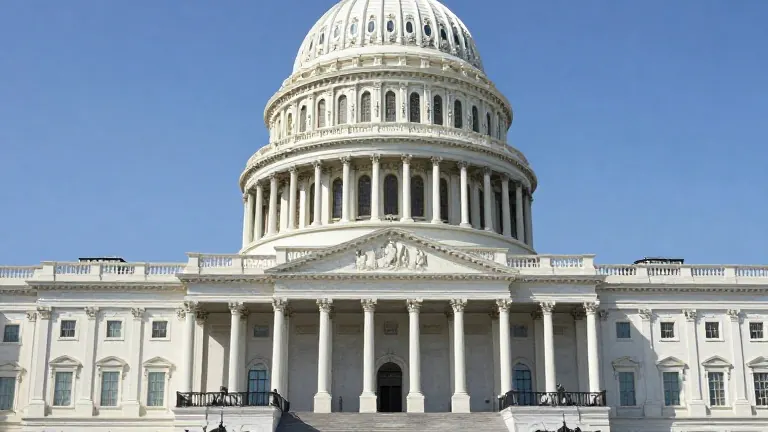
Democratic candidates secured control of both the U.S. House of Representatives and the U.S. Senate in the November 3 midterm elections. This outcome ends the Republican majority in Washington and establishes a divided government for the next two years. The shift represents a decisive rejection of the incumbent party's agenda, with Democrats gaining seats across a wide range of states and districts. The new congressional leadership will take office on January 3, 2027, bringing immediate changes to legislative priorities and oversight functions in both chambers.
The Senate race was particularly contentious, with Democrats needing a net gain of four seats to win a majority. As of early Wednesday, Democrats had won 20 of the 35 contested seats, while Republicans held 13. Seven seats changed party control, all shifting to the Democratic column. A Democratic victory in the chamber was projected as results came in. This gain includes victories in states such as South Carolina and Kansas, where Democrats have not held a Senate seat since 1932. The loss of Senate control also ends an era of rapid judicial appointments for the Republican party, which had used its previous majority to reshape federal courts with conservative judges.
In the House of Representatives, Democrats achieved a decisive win, capturing 233 seats compared to the 138 held by Republicans. This marks a net gain of 30 seats for the Democratic party. The victory gives Democrats a strong mandate to push through legislation and conduct oversight investigations. House Democratic Leader Hakeem Jeffries is expected to become the first Black speaker of the House when the new Congress convenes. He pledged to deliver on the dramatic change voters demanded, focusing on lowering costs of gas, groceries, and other essential goods. The party also indicated it would launch a robust oversight agenda to hold the executive branch accountable.
State-level results mirrored the national trend, with Democrats seizing full control of state governments in at least five states where they previously shared power. In Texas, Democrats took control of the state House for the first time since 2002, following historic wins for governor and U.S. Senate seats. Gina Hinojosa became the state's first Democratic governor since 1994. Republicans retained control of the Texas Senate, but the loss of the House signals a significant shift in the state's political balance. This victory puts pressure on the party to address voter concerns about rising living costs, high gas prices, and inflation, issues that dominated the campaign trail across the nation.
Political analysts noted that the Republican strategy of redrawing congressional districts to secure a midterm edge ultimately failed. At the urging of President Donald Trump, Republicans in eight states reshaped district boundaries over the past year to gain an advantage. However, Democrats lost most of the targeted seats they aimed to flip, and Republicans failed to retain seats they had banked on. The plan fell flat in key states like Alabama, Florida, and Texas. Former Attorney General Eric Holder, chair of the National Democratic Redistricting Committee, stated that the Republican plan was systematically dismantled by voters who chose a new Democratic majority. This outcome suggests that shifting voter opinions on the president and the economy outweighed the structural advantages provided by the new maps.
The AP Voter Poll indicated that about 6 in 10 voters disapproved of how President Trump is handling the presidency, which contributed to the Republican losses. Views of the president's priorities were largely negative, with about two-thirds of voters stating he does not have the right priorities. This dissatisfaction was a major driver of the Democratic surge. In the Senate, majorities in losing states such as Ohio, Iowa, Maine, and North Carolina cited the Republican candidates being too supportive of the president as a reason for their vote. The poll also highlighted that the war in Iran and rising fuel prices were significant factors in voter frustration, with many seeing these issues as central to the campaign's outcome.
President Trump addressed the results on Wednesday, focusing on the construction of a new White House ballroom rather than the election defeat. He invited reporters to the construction site and spoke for nearly 20 minutes about the project, stating it was a structure unlike any other. When asked about the election, he insisted that if he were on the ballot, he would have won. He suggested that voters did not transfer their love for him to the Republican candidates. This approach continued a pattern of deflection, with the president previously telling Fox News that he did not consider the results a personal defeat because he was not on the ballot. He warned of potential gridlock but expressed a willingness to work with the new Democratic-led Congress.
Democrats are now focused on a 100-day agenda that includes efforts to reverse cuts to healthcare programs and lower the cost of living. They have also signaled intent to use their new power to investigate the executive branch, with some lawmakers calling for subpoenas and oversight hearings. The party aims to capitalize on the mandate to pass legislation on education, healthcare access, and tax relief for the middle class. In state governments, the new Democratic majorities will shape policies on data center development, artificial intelligence use, and school funding. These areas were key talking points for voters who sought more affordable living conditions and greater transparency in government operations.