Governors: 18 to 18 Split, 19 Open Seats, and the Nine Battlegrounds
A perfectly balanced starting point for the executive branch of state governments sets the stage for a decisive shift in national power dynamics.
By Amelia Gupta ·
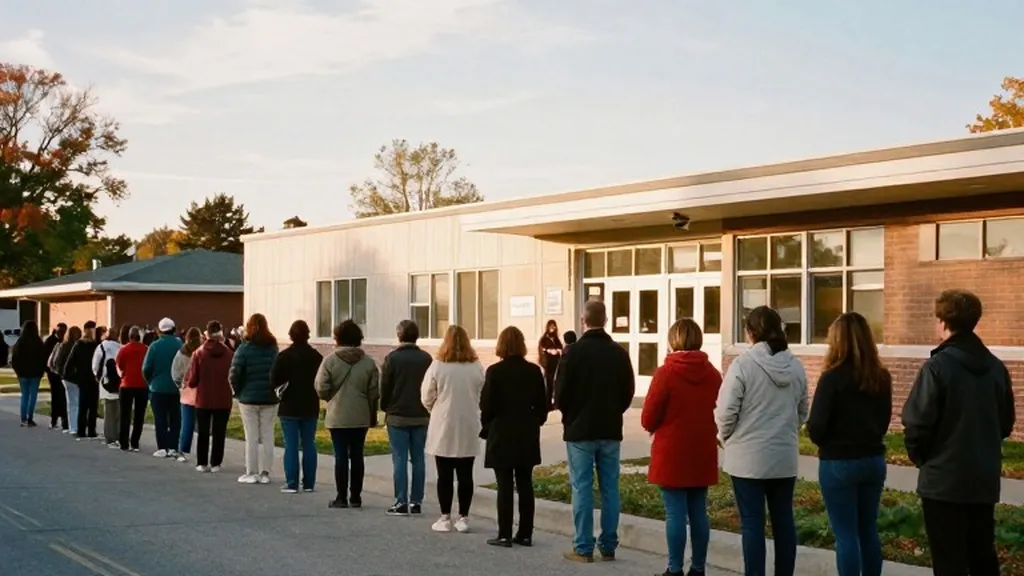
State executive offices are at a precise equilibrium heading into Election Day, with Republicans and Democrats each holding eighteen of the thirty-six governorships currently on the ballot. This perfect split means that a net gain of two seats by either party is required to secure a nationwide majority of statehouses, a dynamic that has favored Republicans since 2010. The outcome of these races will determine which party controls the levers of state government for the next four years, influencing everything from education policy to infrastructure spending.
The competitive landscape is defined by a significant number of open seats, with nineteen of the thirty-six races featuring no incumbent on the ballot. Ballotpedia notes that fifteen of these governors are term-limited, while three others, including Iowa's Kim Reynolds, Minnesota's Tim Walz, and Wisconsin's Tony Evers, chose not to seek reelection. Additionally, Rhode Island's Daniel McKee lost his primary, further opening the field. These open seats create opportunities for challengers to upend established political patterns and for new leaders to emerge in states that have been under long-term control of a single party.
Nine specific governor races have been identified as battlegrounds by Ballotpedia, including Alaska, Arizona, Georgia, Iowa, Kansas, Michigan, Nevada, Ohio, and Wisconsin. In these states, the margins of victory in the 2024 presidential election suggest that either party could prevail, making the governor's office a high-stakes prize. Democrats are defending five of these governorships in states that Donald Trump won in 2024, specifically Arizona, Kansas, Michigan, Pennsylvania, and Wisconsin. Conversely, Republicans are defending two governorships in states that Kamala Harris won, namely New Hampshire and Vermont.
The Associated Press and PBS have highlighted several key matchups that could tip the balance of state power. In Georgia, Republican health care executive Rick Jackson faces Democratic former Atlanta Mayor Keisha Lance Bottoms in a race to succeed Brian Kemp. In Nevada, Republican Governor Joe Lombardo is challenging Democratic Attorney General Aaron Ford for control of the statehouse. In Ohio, the race pits Republican Vivek Ramaswamy against Democrat Amy Acton, with Ramaswamy's campaign facing recent scrutiny over an advertisement featuring Acton's estranged mother.
The Associated Press also flags Texas, Florida, and Iowa as competitive governor races, suggesting that the fight for state executive power extends beyond the nine battlegrounds listed by Ballotpedia. Democrats are hoping to hold a majority of governorships for the first time in two decades, a goal that depends on their ability to perform well in states where they are defending incumbents or running in open seats. The outcome of these races will have significant implications for the broader political landscape, as control of statehouses often serves as a barometer for national sentiment.
The mood surrounding the election is characterized by a deep sense of division and uncertainty, with voters grappling with high prices and an unpopular war with Iran. AP-NORC polling indicates that 35% of U.S. Adults approve of President Trump's job performance, while 25% approve of his handling of the economy. About seven in ten Americans say the country is heading in the wrong direction, with most blaming the president for high prices. This sentiment is likely to influence voting behavior in the governor races, as voters seek leaders who can address their economic concerns and restore a sense of stability.
Republican and Democratic leaders are taking different approaches to the election, with Republicans bracing to lose the House and fighting to hold the Senate. The Associated Press reports that one or two seats could tip either chamber, making the governor races a crucial component of the overall strategy. Democrats, meanwhile, are described as cautiously optimistic, with their leadership emphasizing the need for change and accountability. The contrasting tones of the two parties reflect the broader ideological divide that defines the current political landscape.
The financial aspect of the election is also notable, with the 2026 elections likely to be the most expensive in history. Republican committees have outraised and outspent their Democratic counterparts, aided by Trump-affiliated groups and Elon Musk, while Democrats have outraised their opponents at the candidate level. The Associated Press analysis of AdImpact data reveals that 88.1% of Republican general election TV ad spending went to states and districts that Trump won in 2024, including more than $850 million in areas where he won by ten points or more. This spending strategy suggests that Republicans are focusing on defending their base, while Democrats are attempting to expand their reach in more competitive areas.
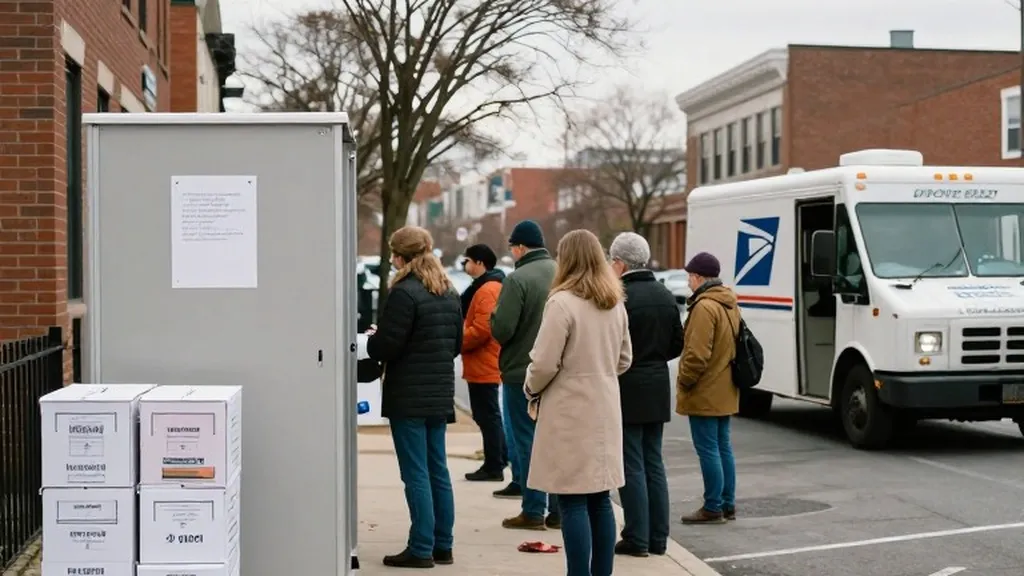
The election also raises questions about the administration of the vote, with a federal judge temporarily barring the Trump administration from carrying out a plan to prevent noncitizen voting. Critics argue that the plan risks disenfranchising eligible voters and infringes on states' authority over elections, while supporters contend that it is necessary to ensure the integrity of the process. The U.S. Postal Service has added hours, staff, and special lines to ensure that mail ballots are counted on time, a measure that is crucial in states where mail voting is a significant component of the election. These administrative decisions could have a significant impact on the outcome of the governor races, particularly in close contests.
As voters head to the polls, the stakes for the governor races are clear: a net gain of two seats will determine which party controls the statehouses of America. The perfect 18 to 18 split provides a clear benchmark for success, and the nineteen open seats offer a unique opportunity for change. The nine battlegrounds identified by Ballotpedia will likely be the focal point of the final days of the campaign, with both parties pouring resources into these states in an effort to secure a decisive victory. The outcome of the governor races will have lasting implications for the balance of power in American politics, and voters in these states will play a crucial role in shaping the future of the nation.