Midterm math: How both parties are fighting to break the historical pattern of losses
With polls open, Democrats seek a net gain of three House seats while Republicans aim to hold the Senate, relying on turnout and new district maps to defy the midterm curse.
By Javier Sanders ·
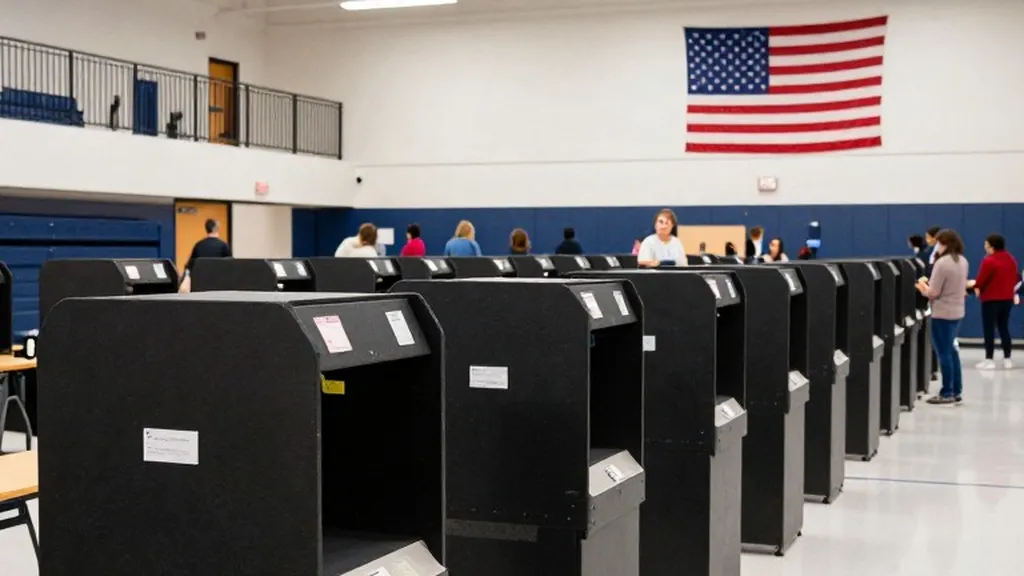
Voters across the United States are casting ballots on Election Day, Tuesday, November 3, 2026, in a midterm election that determines who controls Congress for the final two years of President Donald Trump's second term. The Associated Press describes the day as a referendum on the current administration, with many citizens struggling with high prices and expressing anger over an unpopular war with Iran. Polling data from the AP and NORC indicates that 35 percent of U.S. adults approve of Trump's job performance, while only 25 percent approve of his handling of the economy. Approximately seven in ten Americans say the country is heading in the wrong direction, and most of those voters blame the president for rising costs.
The central question for political strategists is whether the parties can overcome the historical pattern that a president's party almost always loses seats in midterm elections. Republicans are bracing for potential losses in the House while fighting to retain their majority in the Senate. The Associated Press notes that one or two seats could tip the balance in either chamber. Democrats, described as cautiously optimistic, are focused on specific numerical thresholds. To gain a majority in the House, Democrats need a net gain of three districts. In the Senate, they need a net gain of four seats to secure control. Republicans can afford to lose no more than two House seats and only two Senate seats to maintain their majorities.
In the House, all 435 seats are up for grabs. Republicans currently hold 218 seats, while Democrats hold 214, with one independent and several vacancies. Ballotpedia identifies 46 battleground districts, including 25 held by Democrats and 21 by Republicans. The political landscape has shifted due to redistricting in six states, including California, Florida, Missouri, North Carolina, Tennessee, and Texas, which have new congressional maps. Additionally, Ohio is using a new map. These changes create uncertainty, as Republicans tried to beat the midterm pattern by redrawing districts, but new districts may not vote as originally intended. Twenty-one districts held by Democrats voted for Trump in 2024, while nine Republican-held districts voted for Kamala Harris.
The Senate race involves 35 of the 100 seats, with 13 races considered battlegrounds by Ballotpedia. Key contests include North Carolina, where Democratic former Governor Roy Cooper faces Republican Michael Whatley, and Georgia, where Senator Jon Ossoff is running against Representative Mike Collins. In Ohio, Democratic former Senator Sherrod Brown is challenging Republican Senator Jon Husted. The Associated Press highlights that economic strain and tariffs have made Maine a competitive state, where Senator Susan Collins faces Troy Jackson. In Alaska, the Trump administration filed a lawsuit related to the certification of the Senate result, adding a layer of legal complexity to the race involving Dan Sullivan.
Governorships are also a critical component of the midterm pattern, with 36 offices on the ballot. Republicans hold 26 governorships and Democrats hold 24. Democrats would need a net gain of two governorships to achieve a nationwide majority, a feat they have not accomplished since 2010. Notable races include Georgia, where Republican Rick Jackson faces Democratic Keisha Lance Bottoms, and Nevada, where Governor Joe Lombardo runs against Attorney General Aaron Ford. The Associated Press calls Texas, Florida, and Iowa competitive governor races. In Ohio, Vivek Ramaswamy faces Amy Acton, with Ramaswamy's campaign facing backlash over an ad featuring Acton's estranged mother.
Turnout is the primary tool both parties are using to attempt to beat the historical midterm loss. RNC Chairman Joe Gruters stated that everything depends on turnout, asserting that if Republicans turn out their voters, they will win. Conversely, DCCC Chair Representative Suzan DelBene said the American people are angry and want change. More than 57 million people had already voted as of Monday, surpassing early vote totals from four years ago in many closely watched states. President Trump held dozens of rallies, ending Sunday in Salina, Kansas, where he told supporters to pretend he was on the ballot. His schedule included stops in Mississippi, South Carolina, and Texas, though many Republican candidates kept their distance from the president during the campaign.
Money has played a significant role in the 2026 elections, which are likely to be the most expensive in history. Republican committees outraised and outspent Democratic committees, aided by Trump-affiliated groups and Elon Musk. However, at the candidate level, Democrats outraised their opponents. An AP analysis of AdImpact data shows that 88.1 percent of Republican general election TV ad spending went to states and districts Trump won in 2024. This includes more than $850 million spent in areas where he won by 10 points or more. Democrats focused their spending on flipping specific seats to achieve the necessary net gains for control.
The mood among voters is mixed, with some expressing support for the president's leadership and others citing financial stress. Mark Barker of Palm Beach Gardens, Florida, said he has been following Trump the whole time and thinks he is doing an awesome job. James Moore, a 57-year-old librarian in Raleigh, North Carolina, noted that he is paying more taxes, more for healthcare, and more for everything. These sentiments reflect the broader divide in the electorate, with the Associated Press noting that the election is a referendum on the second term. Voters are making decisions based on local candidates and national issues, aware that the outcome will shape the legislative agenda for the next two years.