Federal Mandate Sets Cyan Standard for Driverless Vehicles
Regulators propose a uniform blue-green lighting system to identify autonomous cars, while simultaneously dismantling legacy requirements for manual controls.
By Javier Sanders ·
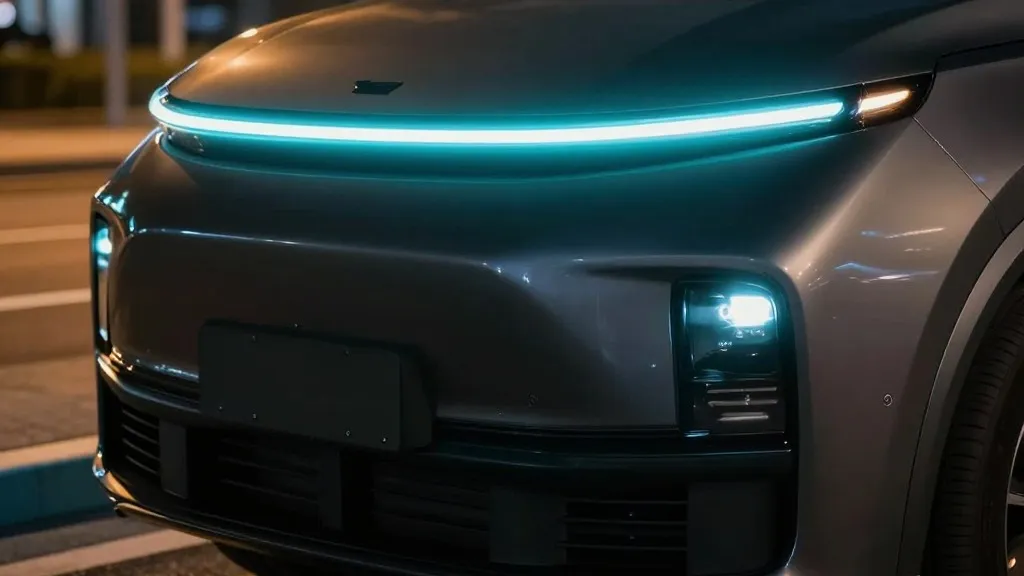
The federal government has issued a definitive proposal to resolve the long-standing confusion surrounding how autonomous vehicles communicate their operational status to the rest of traffic. By designating a specific blue-green hue as the national standard for robotaxis, the National Highway Traffic Safety Administration (NHTSA) aims to create a universal visual signal that indicates a human is not at the wheel.
The proposed amendment to Federal Motor Vehicle Safety Standard No. 108 centers on the implementation of cyan-colored marker lamps. Officials argue that this specific shade fills a critical gap in the current visual landscape of the road. Existing automotive lighting relies heavily on red, amber, white, and flashing blue or red for functions like braking, turning, and emergency response. Cyan, by contrast, offers a distinct visual identifier that prevents overlap with these established signals, ensuring clarity for law enforcement and other road users.
Several industry giants, including Waymo, Nuro, Zoox, GM, and Mercedes-Benz, could adopt this uniform standard. While Mercedes-Benz previously secured state-level approval for turquoise lights on its Level 3 Drive Pilot vehicles, the company later pivoted to a Level 2++ system. This federal move seeks to establish a consistent national framework rather than leaving operators to navigate a patchwork of local approvals.
Under the new proposal, the installation of these cyan lights would remain optional for manufacturers. However, once adopted, the lamps must adhere to strict federal guidelines regarding their color, brightness, and placement. This standardization is designed to prevent a chaotic mix of varying colors and signal types, ensuring that any driver or officer on the road can instantly recognize an automated vehicle.
The regulatory update extends beyond lighting to streamline the physical design of driverless cars. NHTSA proposes removing requirements for physical hazard switches, manual beam shifters, and interior turn levers, features that are redundant in vehicles without human drivers. Additionally, the agency is updating the 12.8-volt testing standard to accommodate modern LED architectures and is considering the removal of rules that dictate the vertical positioning of high-beam relative to low-beam lights.
These changes reflect the Department of Transportation’s broader administrative effort to facilitate the deployment of autonomous vehicles. The goal is to remove administrative barriers that force automakers to include traditional controls like steering wheels and pedals, which are unnecessary for fully automated systems. By simplifying the regulatory landscape, the federal government intends to accelerate the integration of human-free designs into the mainstream.
Despite this push for flexibility, regulators continue to enforce existing rules strictly. Last month, NHTSA launched an audit query into the Tesla Cybercab to examine the technical data used for its certification. The investigation focuses on the vehicle’s lack of sideview mirrors, pedals, and a steering wheel, components currently mandated by the Federal Motor Vehicle Safety Standards. This dual approach highlights the tension between updating rules for the future and maintaining rigorous oversight in the present.