Jacksonville links gun violence to legacy of toxic waste and redlining
Researchers and residents say decades of lead exposure in redlined neighborhoods correlate with high rates of child firearm injuries in Duval County.
By Javier Sanders ·
Jacksonville officials and public health researchers are linking the city's high rates of child gun violence to the long-term effects of redlining and exposure to toxic waste. A study led by the University of Wisconsin-Milwaukee found that lead exposure during the first six years of life is associated with an increased risk of firearm violence in early adulthood. The findings align with local data showing that neighborhoods once designated as undesirable for lending by the federal government continue to face disproportionate health and safety challenges.
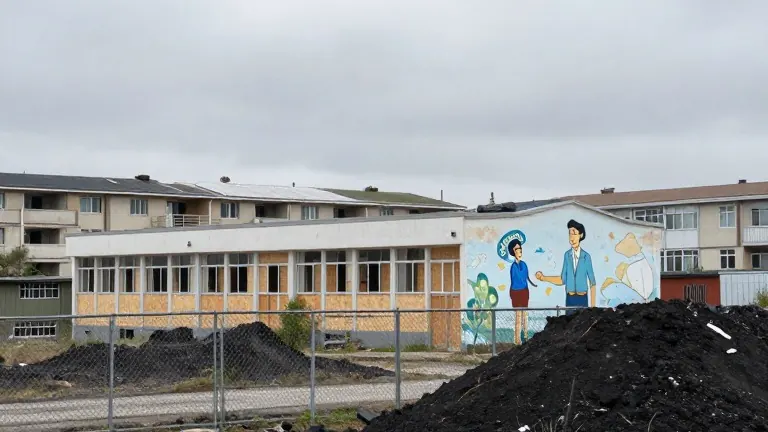
From the late 1940s until the mid-1950s, the city operated a landfill known as Brown’s Dump on a 250-acre site. Officials heaped toxic ash from nearby municipal incinerators onto the land, which was then developed into homes and apartment complexes. The Duval County School Board built an elementary school named for Mary McLeod Bethune on the property, where generations of Black children lived and played. The school closed in 2001, and cleanup efforts for lead, arsenic, and other contaminants did not begin until 2009.
Hospital claims data obtained by KFF Health News and The Trace reveals that more than 4,000 children in Florida were hospitalized for firearm injuries between 2018 and 2024. This averages to about 1.5 children per day statewide. In Jacksonville, at least 375 children under age 18 were hospitalized for firearm injuries during that same period. Of those, at least 150 came from ZIP codes 32206, 32208, and 32209, the areas surrounding the former Brown’s Dump site. These three ZIP codes rank among the ten worst in Florida for child firearm injury rates.
Lindsay Emer, the lead author of the Wisconsin study, described the situation as a legacy of segregation and redlining. She called it a massive environmental injustice affecting the African American population. Jeffrey Goldhagen, a professor emeritus of pediatrics at University of Florida Health Jacksonville, stated that removing lead from the environment is a critical step to impacting gun violence in the Black community. He noted that there is no known safe amount of lead for humans and that exposure can impair cognitive development and impulse control in children.
The city’s response to its history has been slow. In 2024, the Jacksonville City Council unanimously approved a resolution to redress the effects of redlining. Two years later, community activists say there is little evidence of progress. In 2023, the U.S. Justice Department reached a $9 million settlement with Ameris Bank, alleging it redlined predominantly Black and Hispanic neighborhoods. Palmer Proctor, the bank's CEO, disputed the accusation of discriminatory conduct but agreed to set up a loan subsidy fund and open a new branch in a minority neighborhood.
Controversy continues over a new medical examiner’s office and morgue built in the Brentwood neighborhood. The facility sits across the street from a public charter school. Residents had requested an urgent care center or a pharmacy for the site instead. Anthony Brown, founder of the Red Alliance for Justice, criticized the city council for spending over $60 million on the morgue without creating a dedicated funding source to improve life in redlined neighborhoods. He argued that the construction is part of a broader pattern of systemic issues including housing and policing.
Laura Bell, a lifelong resident of Brentwood, said the morgue feels like a second wave of redlining. She noted that more than 80% of the neighborhood's residents are Black and that the facility sends a negative message about the worth of lives in the area. A spokesperson for Mayor Donna Deegan declined to answer questions regarding gun violence and racial inequality. Council member Jimmy Peluso acknowledged that the north side of the city has been ravaged over the years and has not been given proper opportunities to stand on its own feet.
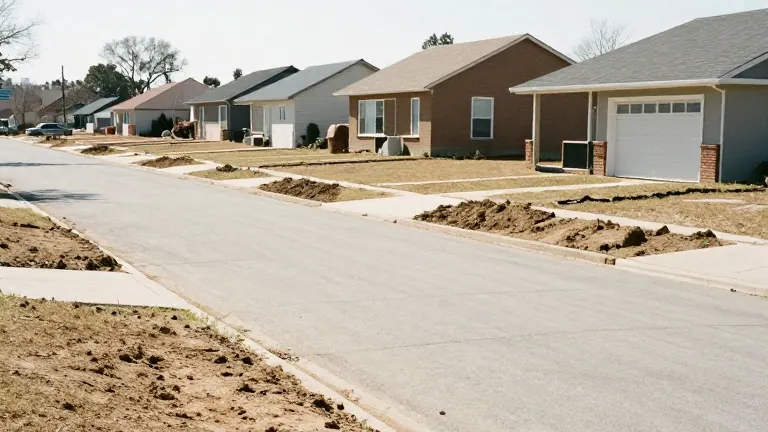
An Environmental Protection Agency report from December 2024 stated that much of the Brown’s Dump site has been cleaned or covered with new soil to reduce exposure. The EPA also reported that authorities were cleaning a second Superfund site called the Jacksonville Ash Site, which covers more than 1,100 acres. While the agency said the contamination no longer threatens people living nearby, Goldhagen argued that severe damage had already been done to the community's health.