Portable Music History: The iPod's 25-Year Legacy
The 2001 launch of Apple's 5GB hard drive player redefined consumer electronics and established the foundation for the digital music era.
By Allison Rojas ·
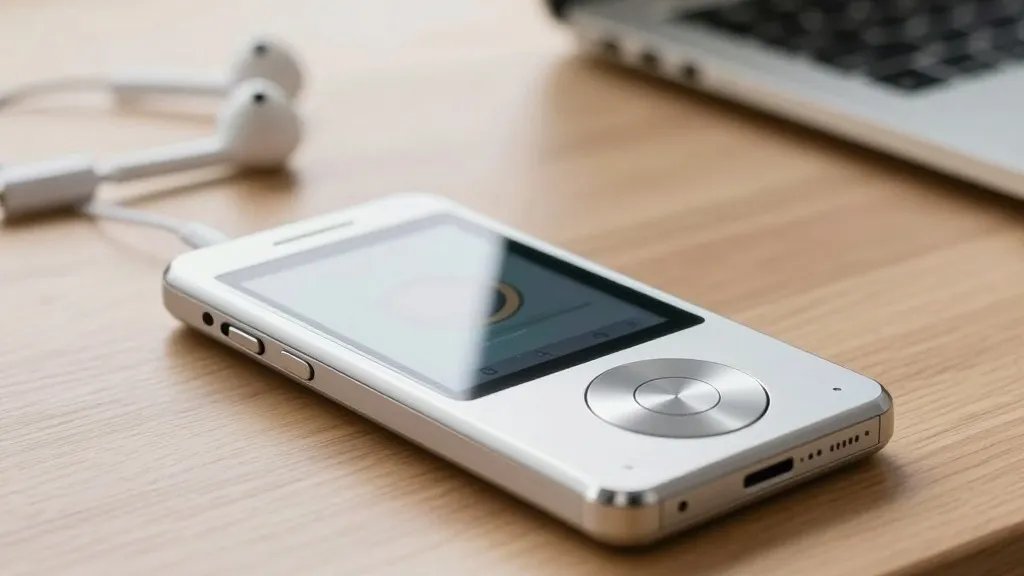
The introduction of a 5GB hard drive player in a device the size of a deck of cards fundamentally altered how consumers interact with personal media. On this day in 2001, Apple CEO Steve Jobs unveiled the original iPod, a gadget that promised to hold 1,000 songs for a price of $399. This specific combination of storage capacity, physical form factor, and pricing created a new category of portable digital music player and set the stage for the next two decades of consumer technology trends.
The device arrived at a pivotal moment for the Cupertino-based company. Following the dot-com bubble burst, Apple was undergoing a significant revival under Jobs' leadership. The Mac OS X era was well established, with popular lines like the iMac and iBook driving consumer interest. Jobs envisioned the computer as the central hub for a user's digital life, connecting cameras, video recorders, and portable audio devices. He identified a gap in the market where no dominant leader existed for portable music, despite the presence of competitors like Sony, Creative, and Sonic Blue.
At the time of the announcement, the market offered four primary options for portable audio: standard CD players, MP3 CD players, flash memory players, and hard disk-based units. Jobs selected the hard disk approach as the most viable path for mass market entry. He argued that while other manufacturers had attempted to enter the space, none had yet found the correct formula for successful digital music consumption. The new device was designed to play MP3, WAV, and AIFF formats with CD-quality sound, addressing the needs of a broad audience of music lovers.
The physical design of the player was a critical component of its success. The device measured 2.4 by 4 by 0.78 inches and weighed 6.5 ounces, making it lighter than many cell phones of that era. This compact profile was made possible by Toshiba's new 1.8-inch hard drive, which was only 0.2 inches thick. The internal storage allowed for approximately 1,000 typical pop songs encoded at 160Kbps. Jobs emphasized that for the average user, this capacity represented their entire music library, effectively moving the collection from a desktop computer into a pocket.
Performance and connectivity were further differentiators for the new product. The player featured a single FireWire 400 cable for both charging and data transfer. Apple claimed this connection allowed a full CD of music to be transferred in five to 10 seconds, a significant improvement over USB connections of the same period. Jobs noted that transferring a full library of 1,000 songs would take about 10 minutes via FireWire, compared to five hours on a typical USB device. The device also included 20-minute skip protection to ensure continuous playback during physical movement.
The user interface focused on simplicity and tactile feedback. The design featured minimal back and sides, with controls optimized for one-handed operation. A scroll wheel with a piezoelectric clicker provided tactile responses, allowing users to quickly locate and play music by playlist, artist, or track. During the initial demonstration, the first song played was 'Building a Mystery' by Sarah McLachlan. The device was powered by a rechargeable lithium-polymer battery that offered 10 hours of continuous playback and could be recharged to 80 percent in one hour.
The launch was synchronized with the release of iTunes 2, which introduced features like MP3 CD burning and library syncing. The Auto-Sync feature ensured that music libraries curated on a Mac would automatically update on the iPod whenever the device was connected. This integration reinforced the strategy of making the computer the center of the digital lifestyle. The iPod also functioned as an external FireWire hard disk drive, adding utility beyond music playback.
The product line continued for nearly two decades, coexisting with the iPhone, which launched in early 2007. For over ten years, both devices were core parts of Apple's hardware ecosystem. However, the rise of smartphones gradually reduced the need for dedicated music players. The final model, the 7th-generation iPod Touch, was released in May 2019. Although the line was left without updates for several years, Apple officially discontinued the product in May 2022, marking the end of an era that began with a simple promise to put 1,000 songs in your pocket.