Wyoming Wind Project: Supreme Court Clears Lease for Glenrock Site
The unanimous ruling reverses a lower court decision but grants neighbors standing to challenge the project in future proceedings.
By Amelia Gupta ·
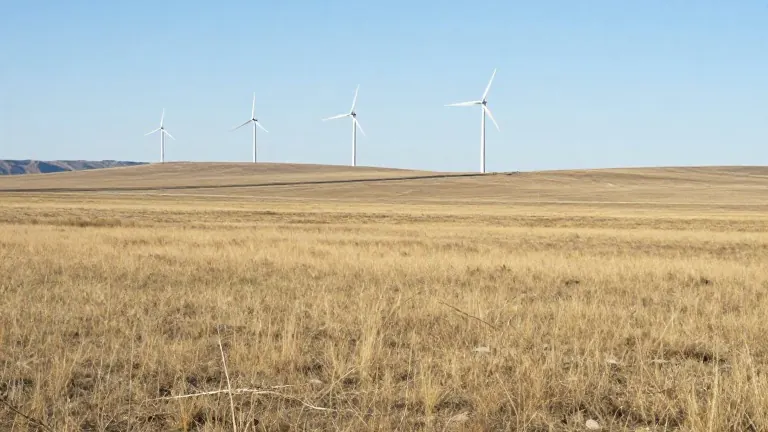
The Wyoming Supreme Court issued a unanimous ruling on Tuesday that permits the Pronghorn H2 wind energy project to proceed near Glenrock. The decision allows the lease on state trust land to move to the next regulatory stage, ending a legal dispute that had stalled development since a district court judge initially rejected the plan. For residents and stakeholders in the region, the project can now advance toward final siting approval despite ongoing concerns from nearby landowners.
The court reversed the decision of Douglas District Court Judge F. Scott Peasley, who had invalidated the lease in part because the project lacked a direct connection to the power grid. Judge Peasley interpreted state wind energy leasing rules as requiring such a connection, a view the state’s high court rejected. The justices determined that the State Board of Land Commissioners acted within its authority by approving the lease south of Glenrock. The ruling clears the path for the project to reach the Industrial Siting Council, which will handle the next phase of the permitting process.
While clearing the immediate hurdle, the court also ruled in favor of petitioners Michael Stephens and Stephens Land and Livestock on the issue of standing. The justices found that the neighbors have the legal right to sue based on their proximity to the site, citing substantial, immediate, and pecuniary harms to views and property values. The court dismissed other legal challenges, including those regarding revenue generation, future mineral interests, and wildlife impacts. It affirmed that the land board may set lease rates on a case-by-case basis and that mineral companies retain leasing rights, provided they do not unreasonably interfere with the wind farm operations.
Gov. Mark Gordon responded to the ruling with a statement asserting that the decisions were made to ensure the highest and best value for state lands. He noted that the court's decision affirms the original vote by the State Board of Land Commissioners. The governor emphasized that the process was guided by legal and contractual obligations rather than political considerations. The project now faces a permitting process with the Industrial Siting Council, a procedure that can take several years and may address additional concerns raised by the plaintiffs.
The plaintiffs retain the option to file for a rehearing within the next 15 days, though such requests are rarely granted. The Pronghorn H2 project fits into a growing energy sector in Wyoming, where approximately 1,500 wind turbines are currently operating. These turbines provide a generating capacity of roughly 3,700 megawatts, which accounts for about 25% of the state’s total electrical generation capacity according to data compiled in April.
The next step is the review by the Industrial Siting Council, which will evaluate the project's siting and environmental impacts. The court’s decision leaves the lease valid but opens the door for further litigation if the neighbors choose to pursue their claims based on the standing granted in this ruling. The state’s trust land lease remains active, and the project developers can begin preparing for the upcoming administrative hearings.