Tech Giants Bet on Gas Plants, Locking in Decades of Emissions
Amazon, Meta, and Microsoft are accelerating greenhouse gas output through new infrastructure, contradicting their earlier climate pledges.
By Amelia Gupta ·
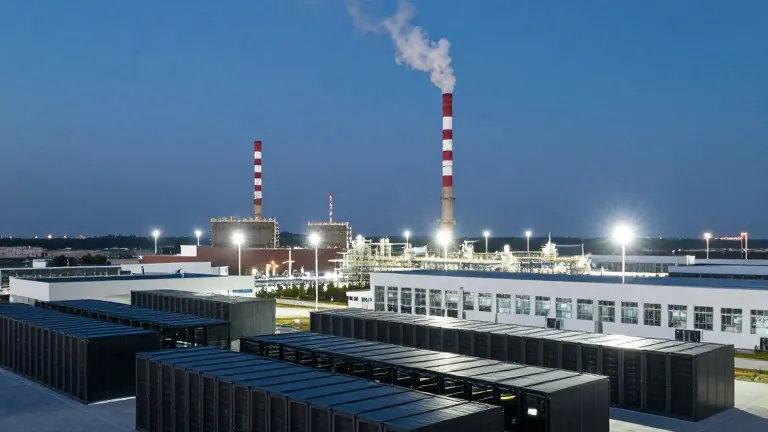
Major technology companies are prioritizing immediate power needs over long-term climate goals by contracting for massive new natural gas plants. This strategy is reversing the trajectory of their emissions, which had previously been framed by leadership as part of a race to zero.
The shift stems from the physical demands of artificial intelligence and cloud computing. Gianluca Guidi, a researcher at the Harvard T.H. Chan School of Public Health, analyzed air permits and corporate disclosures to find that these data centers require land, water, and fuel. He noted that while the digital services appear immaterial, the infrastructure choices made now will persist for decades.
Amazon’s footprint illustrates the divergence from its 2019 pledge to meet Paris Agreement targets ten years early. The company’s carbon output reached 80.85 million metric tons last year, a 58 percent increase since that initial commitment. Two gas projects signed for data centers in Texas and Pennsylvania alone would add pollution equivalent to a 28.5 percent jump in Amazon’s current reported footprint. That combined output would exceed the emissions of the James H. Miller Jr. coal plant in Alabama.
Other firms are following suit with similar scale. Meta is constructing a six-square-mile campus in Louisiana that will consume electricity comparable to three cities the size of New Orleans. The gas plants serving this site will generate more carbon than the entire corporation currently reports. In West Texas, Microsoft is partnering with Chevron for a facility, while Google is developing a project in Wyoming that would consume five times the electricity of the state’s residential sector.
Thomas Day, director of corporate accountability at the New Climate Institute, described the trend as a disaster from a climate perspective. He argued that these companies are locking in fossil fuel assets that will become some of the largest emitters globally. He added that the volume of these projects is increasing with no end in sight.
The tech industry counters that the surge is temporary, driven by an urgent need for speed in the AI race against China. Amazon spokeswoman Margaret Callahan stated that a recent Texas deal is part of a larger picture that includes a portfolio of 42 gigawatts of carbon-free energy. Microsoft reported matching 100 percent of its global electricity consumption with renewable energy last year, while Meta cited contracts for 30 gigawatts of clean energy across seven countries and 28 states.
Climate experts warn that these accounting methods do not alter the physical reality of adding new gas fleets. Allianz, the international insurer, calculated that the tech sector’s emissions threaten to create $164 billion in annual climate damages if the pivot to cleaner energy is not rapid. The company’s June report projects data center emissions will double to 643 million tons of CO2 by 2030. The tech firms plan to rely on future technologies, such as carbon capture, to mitigate this load, though few new plants currently include such equipment.
More Business · Consumer Watch · Report a business · Got a Story?