Drone Ban: Local Leaders Push FCC for Faster Domestic Rules
FCC Chair Brendan Carr met with industry figures in Grand Forks to discuss the impact of banning new foreign-made unmanned aerial systems on local operations.
By Allison Rojas ·
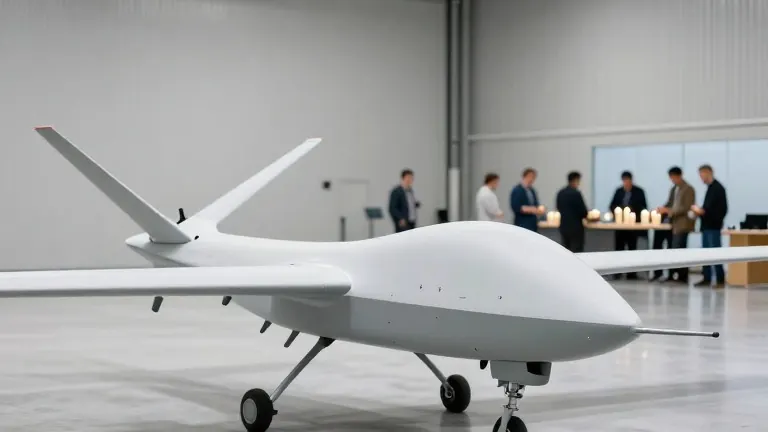
Federal regulators and local drone industry leaders clashed over the pace of domestic production during a roundtable held Monday at GrandSky in Emrado. The gathering focused on the Federal Communications Commission's new ban on purchasing new unmanned aerial systems and components produced in other countries. The rule takes effect for new purchases, leaving drones already authorized for U.S. use before December 2025 unaffected.
FCC Chairman Brendan Carr, an appointee of President Trump, addressed the group of more than a dozen local representatives. Carr stated that the ban sends a clear signal to markets, investors, and domestic manufacturers. He noted that the move has already driven over $6 billion in domestic investment. Carr described the current moment as an opportune time for new capital to flow into the sector.
Senator Kevin Cramer of North Dakota organized the event and led the discussion. The senator said he wants to create incentives for domestic drone production companies. He specifically cited the need to streamline the FCC clearance process for technology that utilizes parts of the frequency spectrum. Cramer called for a regulatory sandbox and a one-stop shop for clearances to prevent delays that currently stretch over months.
The Grand Forks area has become a hub for UAS and counter-drone technology. This growth is driven by major investments from Northrop Grumman and General Atomics, as well as smaller local firms. GrandSky and Grand Forks Air Force Base serve as the central locations for this development. The industry represents a significant portion of the local technical workforce.
Local law enforcement expressed concern that American-made drones have not yet matched the reliability of foreign models. Grand Forks County Sheriff Andy Schneider said his department relies on drones from the Chinese firm DJI. Schneider noted that DJI manufactures between 80% and 90% of the drones used by American law enforcement agencies, including U.S. Customs and Border Patrol. He compared American alternatives to poorly built bicycles with flat tires and loose chains, stating that agencies often leave domestic units on the shelf during critical missions.
Private sector users raised similar concerns about cost and availability. Tommy Kenville, CEO of ISight Drone Services, said American drones tend to be less affordable than those made abroad. Kenville expressed nervousness that the federal government might be overstepping or moving too quickly with the ban. He asked where one can buy a good $20,000 American-made drone today, highlighting the gap in current market options.
More Business · Consumer Watch · Report a business · Got a Story?