Immigration Shifts: Trump's Second Term Data Reveals Record Detentions and Wall Expansion
ICE detentions hit a high of nearly 50,000 in July while 250 miles of new border barriers are completed, according to government figures and new polling.
By Javier Sanders ·
The Trump administration has fundamentally altered the mechanics of US immigration enforcement and border security during its first year in office. Recent data indicates a sharp increase in internal detentions and the rapid construction of physical barriers along the southern border. These changes have occurred against a backdrop of approaching midterm elections, where immigration policy remains a central concern for voters.
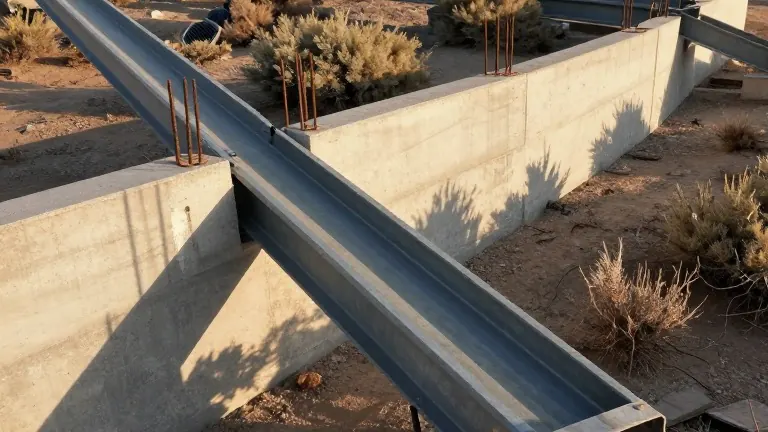
Homeland Security Secretary Markwayne Mullin stated on October 16 that "strong enforcement works" as the administration detailed its progress. Government figures show that approximately 250 miles of new barriers and detection technology have been completed since the president returned to office. An additional 1,443 miles are currently under construction. This expansion follows existing infrastructure that included about 644 miles of primary wall and 75 miles of secondary wall. The new construction is supported by $46.5 billion in funding from the "One Big Beautiful" spending bill.
Immigration and Customs Enforcement (ICE) has recorded a surge in arrests and detentions. The Deportation Data Project reports that ICE reached a record high of nearly 50,000 detentions in July. By mid-July, the agency was removing an average of 1,255 people per day. This rate compares to approximately 770 removals per day during the final months of the Biden administration. Data from the same period shows that 27% of those detained had criminal histories, marking an all-time low for that specific metric.
The physical presence of migrants at the southern border has decreased significantly. During the Biden administration, more than 4.5 million migrant encounters were recorded at the border in 2023 and 2024 combined. Following Trump's return to office, the administration froze asylum applications at the border and ended the practice of "catch and release." Troops were deployed to the region, and Mexico was pressed to reduce northbound migration. A BBC visit to El Paso, Texas, in November 2025 observed quiet streets where temporary camps had previously housed thousands of people.
Aaron Reichlin-Melnick of the American Immigration Council noted that the reduction in crossings is attributed to policy and messaging rather than the new walls alone. He stated that there has been no significant change in crossings since new construction began in earnest. President Trump, speaking at a rally in Kentucky on October 17, referred to himself as "the King of the Wall" and repeated claims that Mexico would pay for the structure.
Public opinion on these enforcement tactics is divided. A New York Times and Siena poll released on October 21 found that 50% of voters trust Democrats on immigration issues, compared to 46% who trust Republicans. This finding is notable because immigration has traditionally been a strength for the Republican party. A separate Politico and Public First poll from late September found that 31% of non-MAGA Republicans believe the campaign has become too aggressive. This sentiment follows Operation Metro Surge, a two-month enforcement action in Minneapolis in early 2026 that resulted in the deaths of two US citizens.
Refugee admissions have also changed dramatically. The administration suspended admissions shortly after taking office. In February, the process was narrowly reopened for Afrikaners from South Africa, a group the White House claims is persecuted. The cap for fiscal year 2026 was initially set at 7,500 and raised to 17,500 in May. State Department data shows that 16,292 refugees have been admitted so far, of which 16,287 were from South Africa. This stands in contrast to the roughly 60,000 arrivals in fiscal 2023 and 100,000 in 2024.
Legal pathways for immigration have narrowed. Dozens of countries face visa or travel freezes due to security concerns. A $100,000 fee on new H-1B visas, introduced in September 2025, led to a 40% drop in registrations for 2027, according to US Citizenship and Immigration Services. A court has temporarily blocked the fee, but the deterrence effect remains. Meanwhile, the "Trump Gold Card" program, which offers residency in exchange for a $1 million gift to the government, has seen minimal uptake with only one applicant accepted by April.