Keith, Walter see redistricting risks for GOP in 2026 midterms
The C-SPAN analysts identified 12 districts in 11 states where new maps drawn by Republicans could flip seats away from their party.
By Javier Sanders ·
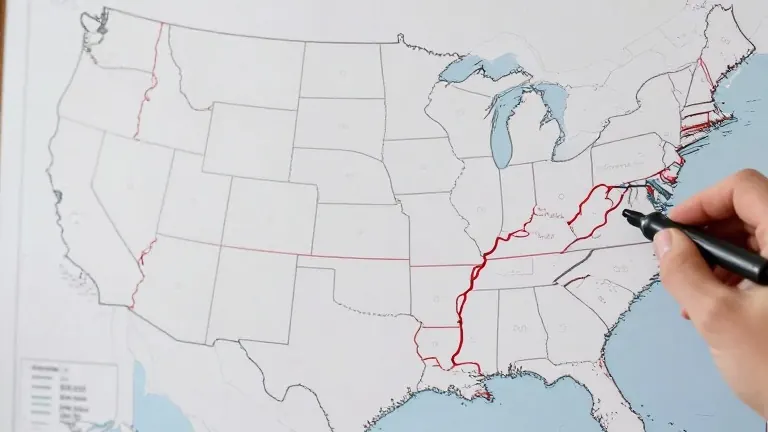
Tamara Keith and Amy Walter, longtime analysts for C-SPAN, issued a warning on Monday about the political calculus behind new congressional district maps. They argued that redistricting efforts driven by Republicans in several states may backfire during the November 2026 midterms. The pair identified 12 specific districts across 11 states where the new boundaries could shift control to Democrats.
The analysts pointed to states that recently enacted new maps following the 2020 census. In their assessment, these changes were designed to protect existing Republican incumbents while expanding the party’s total number of seats. However, Keith and Walter contended that the geometry of these new districts often creates long, winding lines that alienate suburban voters. They noted that in many of these areas, the new maps force Republican candidates to run in districts with higher concentrations of independent and Democratic-leaning voters than their previous territories.
Walter noted that the risk is not uniform. She explained that in states where the Republican-controlled legislatures drew maps with extreme partisan bias, the potential for backlash is highest. The analysts cited Ohio, Florida, and Texas as primary examples. In these states, the new maps consolidate Democratic voters into fewer districts while spreading Republicans thin across multiple seats. This strategy, they said, can lead to razor-thin margins that are easily overturned in a high-turnout election year.
Keith emphasized that the 2026 cycle differs from past midterms because of the timing. The elections will occur in a year when the president, Donald Trump, is in office but facing the midpoint of his second term. She argued that this timing amplifies the effects of unpopular policy decisions, making the new district boundaries more volatile. If the national political environment tilts toward Democrats, the analysts suggest that the 12 identified districts could become competitive toss-ups rather than safe Republican holds.
The caveats in their analysis include the lack of final court rulings in several states. Keith and Walter noted that litigation remains a factor in states like Michigan and New York, where new maps are currently under judicial review. If courts strike down portions of these maps, the number of at-risk districts could change. The analysts also acknowledged that candidate quality and local fundraising will play a decisive role in how these seats perform.
As of the publication date, no state has yet completed a final certification of its new maps that would be used for the 2026 general election. The window for legal challenges remains open in several jurisdictions. Keith and Walter maintained that their list of 12 districts represents the current baseline of risk based on the maps in effect or most recently proposed.