Trump stumps in Mississippi as Republican midterm outlook darkens
Polls show the president's party in peril with the House likely to flip, driven by high costs and the Iran conflict.
By Amelia Gupta ·
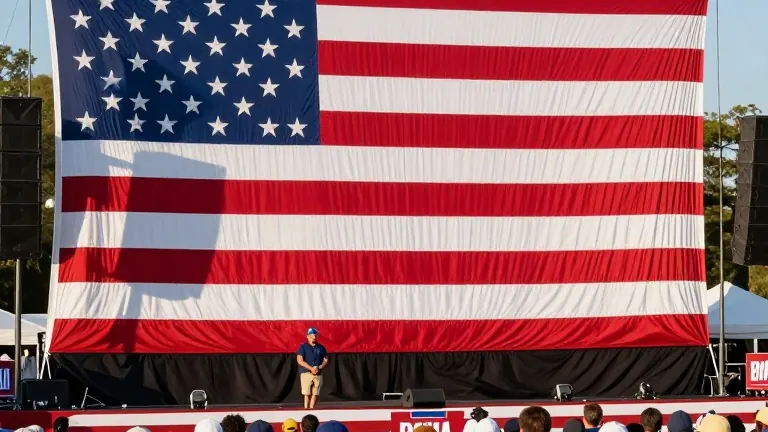
President Donald Trump campaigned in Mississippi this week to support Senate incumbent Cindy Hyde-Smith. The state has traditionally been solid Republican territory, having given Trump 61 percent of the vote in 2024. It has not elected a Democratic senator since the 1980s. Yet the political map has shifted, turning parts of the Deep South into contested ground. Trump told supporters he was present to ensure Hyde-Smith's victory despite her favorable standing.
"I’m here because Cindy’s doing great, but I just got to make sure. I can’t take a chance," Trump said at the event. The need for a presidential visit in a state with such a strong historical lean signals a potential crisis for the GOP. If a state like Mississippi requires a direct push from the president, other seats likely face even greater pressure.
Polling data from RealClearPolitics suggests the Republican hold on Congress is fragile. The party is expected to lose the House. The Georgia Senate race, once a potential pickup, now appears out of reach for Democrats. Several Republican-held Senate seats in Texas, Iowa, Maine, Alaska, Ohio, and Kansas are also showing signs of vulnerability. This defensive posture contrasts with the party's usual strategy of targeting competitive states like Michigan and Minnesota for expansion.
Economic concerns are driving voter sentiment. Inflation was declining under President Joe Biden, but the current administration's tariff policies have reversed that trend. The New York Federal Reserve confirmed that these tariffs drove up prices and that goods would have become cheaper without them. The administration also imposed an equity stake in at least 40 American companies, a move that critics argue contradicts Republican fiscal messaging.
The conflict with Iran has further complicated the economic picture. A joint American and Israeli strike killed Iran's Supreme Leader, leading to a spike in gas prices to a record high for this time of year. This development undermines the campaign promise to avoid long-term wars. High-profile figures from the movement, including Tucker Carlson, Megyn Kelly, and Marjorie Taylor Greene, have distanced themselves from the administration over the conflict.
Trump's approval rating hovers around 40 percent. Approximately 60 percent of Americans believe the country is moving in the wrong direction, according to RealClearPolitics averages. Affordability remains the top issue for voters. Despite this, the administration has spent time on naming changes, such as referring to artificial intelligence as super intelligence and proposing to rename the Gulf of Mexico to the Gulf of America.
The Republican Congress has faced criticism for not exercising more oversight during this period. Ohio Senator John Husted introduced legislation to limit the government's equity stakes in companies to eight years. This legislative effort stands in contrast to the administration's aggressive economic maneuvers. The party's primary argument against Democrats centers on the rise of the Democratic Socialists of America, though some argue the current administration's actions resemble similar leftist economic policies.
The midterm landscape is defined by a party in power facing headwinds it helped create. Tariff schemes and military engagements have raised the cost of living. Republicans are now fighting to protect their majority rather than expanding it. The outcome in states like Mississippi will serve as a key indicator of the party's health on November 3.