3-Way Talks Set for Mid-November After St. Petersburg Summit
Russia, the US, and Ukraine will resume direct negotiations next month following a pivotal meeting between President Putin and US envoy Steve Witkoff.
By Allison Rojas ·
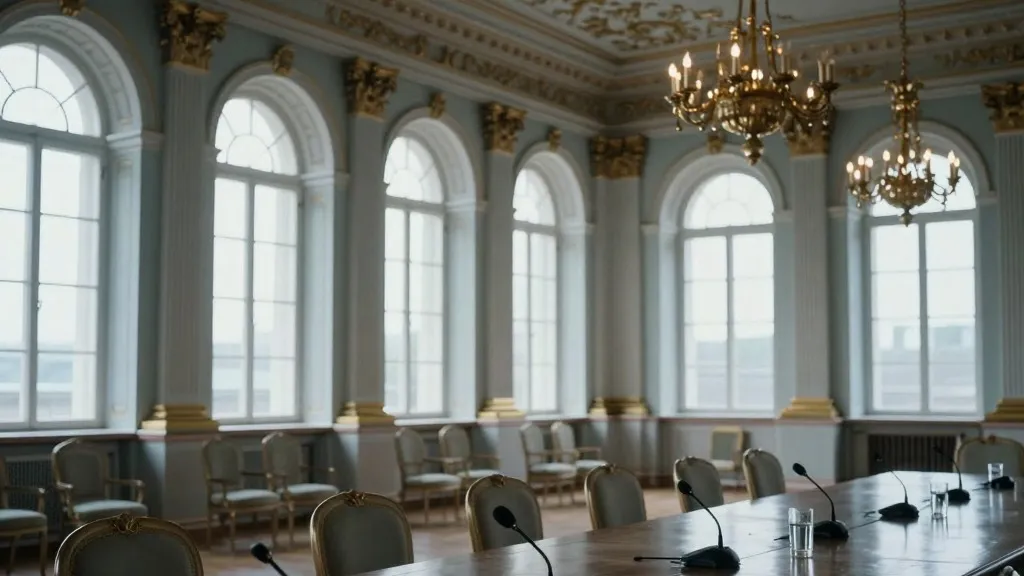
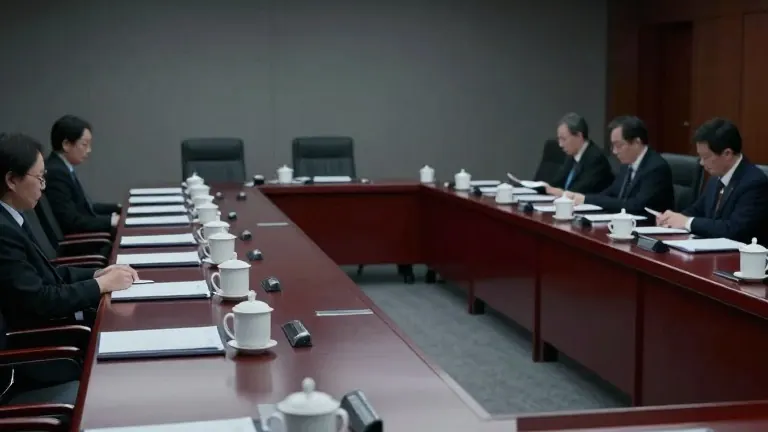
Russia has agreed to restart three-way negotiations with the United States and Ukraine in mid-November, a move that signals a significant shift in diplomatic efforts to end the war. Kremlin official Yuri Ushakov confirmed that President Vladimir Putin accepted the proposal in principle following a three-hour meeting in St. Petersburg. This development sets the stage for the first such high-level talks since February, offering a potential path to peace after more than four and a half years of conflict.
The decision comes after a series of stalled efforts and recent diplomatic friction. In early 2026, representatives from the three nations met twice in Abu Dhabi and once in Geneva. Those sessions yielded limited results, primarily prisoner exchanges, as Moscow and Kyiv remained entrenched in their core demands. More recently, US President Donald Trump intensified pressure on Kyiv to reach a deal, warning that a lack of progress could lead to negative consequences for Ukraine.
The St. Petersburg discussions took place at the Constantine Palace. Witkoff was joined by Russian presidential envoy Kirill Dmitriev, while Jared Kushner participated via video link. The US delegation proposed a technical level meeting and shared updates from Witkoff’s earlier visit to Oslo, where he met with President Volodymyr Zelenskyy and European leaders. Ushakov noted that while the proposals from Oslo lacked some value, they represented a step in the right direction for resolving the crisis.
Zelenskyy voiced support for the swift resumption of talks in an audio message released late Wednesday. He stated that the agenda is clear: to end the war and prepare for a meeting at the leaders' level. However, he acknowledged that Russia had previously canceled similar meetings, leaving Kyiv to see what happens this time. Shortly after his statement, missile alerts sounded over the Ukrainian capital, accompanied by loud explosions.
The timing of the talks coincides with continued military hostilities. Overnight Russian attacks on Kyiv and other cities killed five people and wounded at least 23 others. Energy facilities in Kyiv and three other cities were targeted. The Russian Defense Ministry reported striking a warehouse, an electrical substation, and a bulk carrier near Odesa, while its air defenses intercepted 373 Ukrainian drones over various Russian regions and the Black Sea.
Economic issues also featured prominently in the St. Petersburg discussions. Putin indicated readiness to consider restoring US-Russia economic ties and discussed the US-led conflict with Iran. Ushakov revealed that large-scale joint economic projects were explored in detail, with some nearing the implementation stage. The leaders also discussed a possible trilateral meeting between Russian, Chinese, and US leaders at an economic summit in China next month, with Beijing already preparing for the event.
In a related development, Russia released Stephen Hubbard, a retired American teacher imprisoned on mercenary charges. Witkoff described the move as a goodwill gesture following Trump’s request to Putin. This diplomatic activity follows a period of strained relations between Washington and Kyiv. Trump told reporters at the White House on Tuesday that the US wants Zelenskyy to make a deal, citing significant US support and a lack of tangible returns so far.
Norwegian Prime Minister Jonas Gahr Støre, who met with Witkoff in Oslo after the St. Petersburg summit, believes the region may have entered a new phase where Russia is seeking diplomatic opportunities. He suggested the new talks are likely to occur in mid-November. When asked if Ukraine could accept a border along the current front line, Støre noted that while formal acceptance is unlikely, the practical implications remain a subject of ongoing debate.
The upcoming negotiations aim to build a security system for both Russia and Ukraine after the conflict ends. As the parties prepare for these crucial discussions, the focus remains on translating diplomatic momentum into a lasting peace agreement, despite the continued backdrop of military strikes and economic discussions.
More Politics · Atlanta news · Report a business · Got a Story?