World Leaders Weigh In After Republican Midterm Losses
From Tehran to Berlin, officials interpret the U.S. election results as a shift in war policy and economic priorities.
By Allison Rojas ·
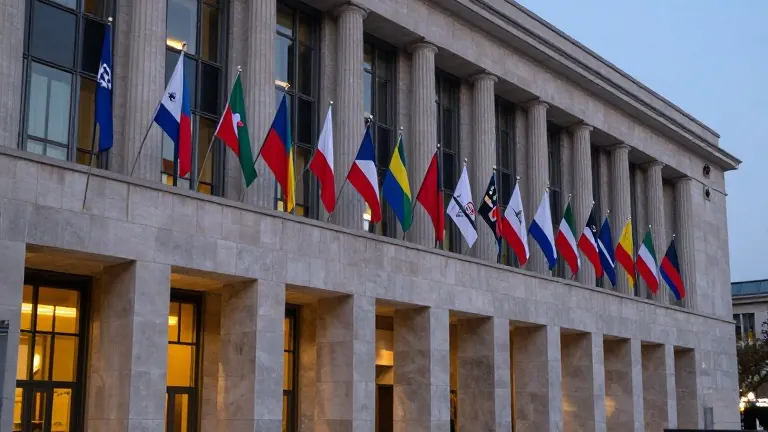
American voters have shifted the balance of power in Congress, a move that foreign governments are already interpreting as a rejection of the administration's eight-month war with Iran. The result forces Washington's counterparts to recalibrate their diplomatic strategies and economic expectations for the coming months.
The conflict, which began alongside Israel more than eight months ago, remains the central issue. In Tehran, Ayatollah Mojtaba Khamenei issued a statement claiming the election would not change Washington's hostile stance. He warned that expecting concessions to reduce U.S. aggression was a mistake. His chief negotiator, Mohammad Bagher Ghalibaf, offered a different read. He stated that Americans voted against war due to high living costs and moral conscience. Ghalibaf added that the U.S. government would face consequences if it ignored that public will.
In Moscow, the reaction was more cautious. Kremlin spokesman Dmitry Peskov said he hoped Trump would continue his peace-making efforts. He noted that new working-level talks between Russia and Ukraine are scheduled for November 10 and 11 in Abu Dhabi. Russian Deputy Foreign Minister Sergei Ryabkov stated that Moscow's policy would remain consistent. He described the Democratic approach as historically strained but said Russia's position on Ukraine would not shift. Ukrainian officials had not issued an immediate response as of press time.
European leaders saw the shift as a chance to strengthen alliances. Spanish Prime Minister Pedro Sanchez called the result a sign that the right-wing populist wave is crumbling. He predicted a similar sentiment would soon take hold in Spain, where his own election is scheduled for November 29. Kaja Kallas, the top European Union diplomat, expressed hope that the new Congress would increase support for Ukraine and apply greater pressure on Russia. She emphasized that Europe and the United States are stronger together in ending the invasion.
British Prime Minister Andy Burnham offered a pragmatic view, citing the cost of living as a unifying global issue. He noted that prices would remain high until the Iran war is resolved. In South Africa, President Cyril Ramaphosa said the people of America had spoken, marking a new era in bilateral relations. This comes amid tense ties, partly driven by the Trump administration's support for the claim that the White Afrikaner population faces persecution.
German Foreign Minister Johann Wadephul predicted closer cooperation with Democrats in control of Congress. He anticipated more engagement to boost support for Ukraine. French Economy Minister Roland Lescure declined to predict Trump's reaction but suggested the president might acknowledge the need for changes regarding gasoline prices and international involvement. Norwegian Prime Minister Jonas Gahr Stoere called the results a powerful political signal, noting that emerging American voices align closely with Norwegian positions on climate and foreign aid.
More World · National news · Report a business · Got a Story?